For Pilgrims, Destination Becomes Destiny
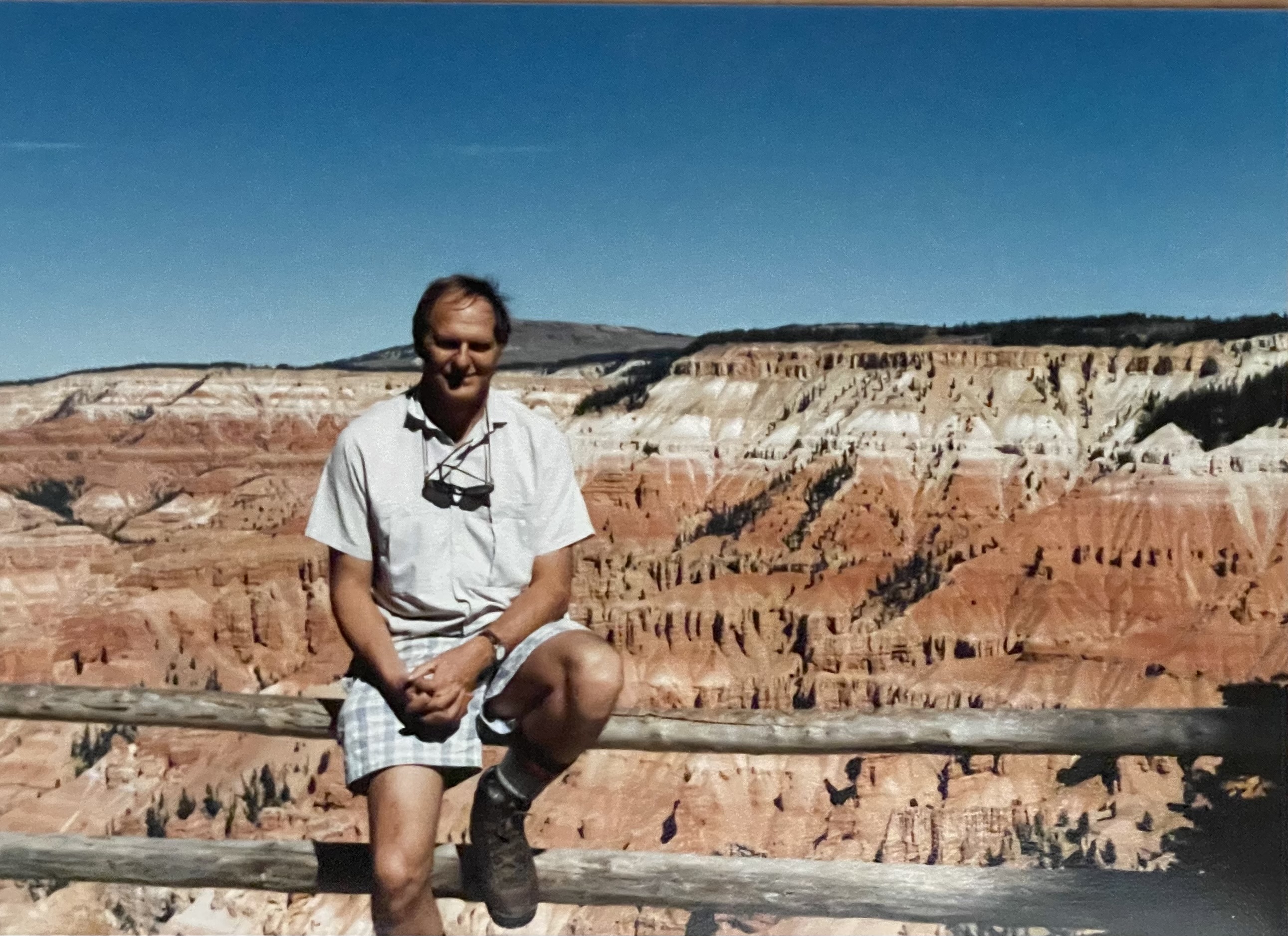
Overlooking the North Rim of the Grand Canyon, the setting sun casting shadows in shades of cobalt and indigo, accentuating the crags and crevices with a fleeting, golden splendor, I heard an exhilarated cry: “We made it!”
A group had just arrived from the South Rim—a grueling, 11-hour trek across the heart of the canyon. I was instantly hooked. My gracious wife agreed to drive to our South Rim reservation, and I would hike the canyon.
Comparing routes on a map, the decision seemed like a no-brainer – the North Kaibab Trail was four miles shorter than the Bright Angel Trail. Looking back, it wasn’t a “no-brainer” — it was a case of “no brain.”
The Descent and the Warning
The descent to Phantom Ranch was magical, even mystical — the 14-mile drop of 6,000 feet was sheer delight – awe and wonder every step of the way. However, I was met with a sobering sign. In foot-high letters, it warned hikers not to take the Kaibab ascent lightly. My internal translation: “Don’t be an idiot. This might kill you.”
The plan was pre-arranged ans I was committed. I set off and the song in my heart soon became a groan. Those final seven miles took seven grueling hours.
I crested the rim as a different person, and the canyon was no longer just a postcard; it was an experience etched into my psyche.
From Place to Purpose
A pilgrim has a destination in mind, but along the way, a transformation occurs. The destination becomes a destiny — the deeper purpose a person grows into through calling, formation, and faithful response. It is a shift from “getting there” to “becoming the kind of person who belongs there.”
What exactly is our destination? For the pilgrim, the destination is to know the will of God. – “Do not be conformed to this world, but be transformed by the renewal of your mind, that by testing you may discern what is the will of God, what is good and acceptable and perfect.”
1 The Incidental Will of God
We naturally crave to know God’s will for our daily decisions. These are “incidental”. A passenger once asked a boat captain how he navigated a treacherous harbor entrance so unerringly.
“You see those three lights?” the captain replied. “I align my ship up until all three are in a single row. That alignment shows me the safe channel.”
Navigating the tricky waters of the journey requires alignment. Think of these Three Harbor Lights as your markers:
- Circumstances: A true harbor light isn’t a door we kick down; it’s a path that clears as we walk in obedience.
- Scripture: is the fixed light that never shifts. If a “circumstance” seems to lead toward something God prohibits, the lights are out of alignment. We don’t need a new sign when we already have a clear command.
- Wise Counsel: In the heat of the journey, we often have “trail blindness” — choosing a shorter route because it looks faster on a map. Wise counsel provides the perspective of those who have walked these miles before us.
2 The Primary Will of God
Our ultimate destination is Heaven. However, the pilgrimage is about more than just a future arrival; it is about character formation en route. We seek to know God now so that Heaven, being face to face with God, is current enjoyment.
Paul prays for a “complete knowledge of His will. “The word for “know” used here—epignosis—is a composite word made up of the intensifier epi (think “epic”) joined to the verb “to know.” It is an intense, experiential, epic knowledge. It is the difference between reading a map of the Grand Canyon and hiking the Canyon for yourself. .
When we know God as Guide, Encourager, and Mentor, we aren’t just waiting for a distant reward. We are being forged in real-time, changed into the image of Christ — not through a legalistic keeping of rules, but through a delightful relationship. As the Psalmist says, “The Lord makes firm the steps of the one who delights in him; though he may stumble, he will not fall, for the Lord upholds him with his hand” (Psalm 37:23-24).
This internal delight isn’t meant to be lived in a vacuum, in a quiet corner of spiritual isolation. On the contrary, when we truly delight in Him, it creates a spiritual centrifugal force. The closer we get to the center — the more we rotate around the heart of God — the more powerfully we are propelled outward into the lives of others, propelled by the centrifugal force of God’s love into the thick of daily life. Like Ambassadors, we represent the King wherever our incidental lives are lived — from the stress of the workplace to the long silence of a hospital ward. We don’t just point the way to a distant country; we bring the life of that country into the room with us. Your experiential encounter with God isn’t just for your benefit; a pilgrim is an Ambassador representing God. It is in this sense that the destination — becoming like Him — becomes your destiny.
The Profound Gift of Presence
Jesus promised that He would give the Holy Spirit to be with us in His stead; it is as simple as receiving the gift He pledged.
When offered a piece of essential, life-saving advice, you receive it simply, by saying ““Thank you.” The same is true here. All that is required of you is to remember His promise and respond with gratitude. Jesus said, “if we know how to give good gifts to our children, how much more will the Father give the Holy Spirit to those who ask Him?
Don’t overcomplicate it, remember the promise, and say, “Thank you.” Say it so often that gratitude becomes your routine response to life. Say thank You for all the joy, say thank You for all the sorrow.
And in saying it, know the gift is yours.


Leave a Reply