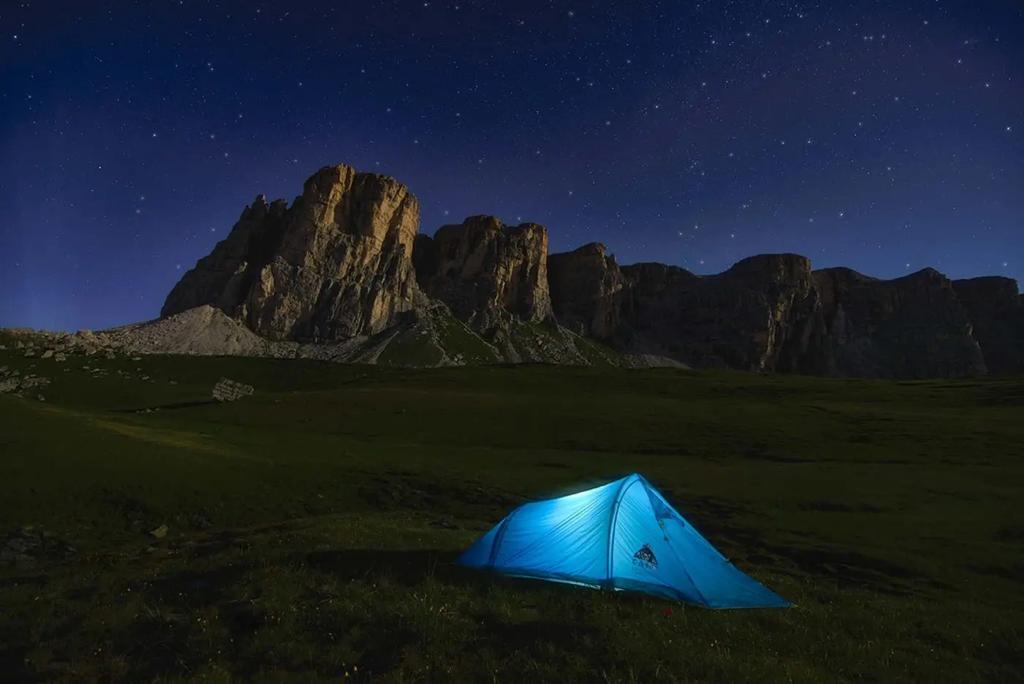
Arctic nights are life in total blackout in freezing temperatures with regular blizzards. For some the Arctic Night is not just one season, life seems to stall in that miserable tent.
Then all that the positive theology of explanation conjures up is a ferocious blizzard that never seems to end. The usual comforts act like salt in the wound.
Biblical examples are plentiful. Job searched for God but the blinding snow of his Arctic Winter blotted out any signs of a caring God.
Elijah descends into the morass and asks for death under a juniper tree.
Isaiah references saints in darkness. His reference is apparently couched in the life of The One who went through the most bitter Arctic expereince, when he cried out of a total eclipse, “My God! My God! Why have you forsaken me.” Remember, ” My God” in his case was his Father!
There is this reassurance, however, Job states that God knew the way he was taking – he could not find God, but God was fully cogniscant of him. David expands on that in Psalm 139, and points out that God “discerns” our thoughts from afar. That means he goes beyond just being aware that we are in the Arctic, he discerns the inner conflicts that rage like a fierce blizzard in the inner chamber of your heart. And the David adds, “Darkness is no dark to you. The darkness shines like the light.”
Why? What would God do such a thing? More than allow it, promote it.
Two stories:
Ron Filby served as a missionary in Angola. He contracted cancer and had one leg amputated. His recovery took six months, but he returned to his task with love and joy. During the ordeal tormented himself with The Why, he was in a despairing depression. His biography, “This One Thing”, written by one of my mentors, Jimmy Ferguson, references Isaiah 50:10, – walking in darkness. Then the cancer returned with vengeance. Once more he soldiered on. The cancer spread and he spent his last days in the Johannesburg General Hospital. Some years later a hospital survey of staff included a question concerning outstanding patients. Ron Filby was at the top of the list. One Doctor wrote, “When Ron died, it was if a great light left the hospital.” He was unaware that his darkness was light to an entire hospital.
Corrie ten Boom assisted many Jews escape the Nazi net but was eventually sent to a concentration camp. When she and her sister Betsy arrived, the dormitory was like a cage of animals. Gaunt women were stealing food from each other, there was visceral hatred on display. Corrie and Betsy started showing love and compassion. They shared their meagre rations with the weakest, they nursed the dying and cared for everyone. Gradually the whole dormitory was transformed into a sisterhood.
“…for the sake of the Body“
Paul states he rejoices in his suffering because it is in the shadow of Christ’s suffering, and then he adds, it is all for the sake of the Body. The devil would isolate you from God. God exalts you by linking you in a special bond of fellowship, and granting you the privilege of having a special role in his stellar plan for the world through the Body of Christ. None of us are aware of the impact of our lives, and the suffering ones have the greatest role to play.
Rejoicing here does not mean you will expereince peace and joy, it means you will rest in the knowledge that there is a grand overall purpose, and you are an important part of bringing it to pass. We can never gauge our effectiveness, and martyrs seemingly have their effectiveness ended through gruesome deaths. Yet it is these very martyrs who have turned the word “martyr” into metaphor, a metaphor for triumph. The word “martyr” comes originally from the ancient Greek legal term for “witness“, for someone who gives testimony or evidence in a court of law. The witness you give is in the glare of the approval of God.
“… walks in darkness and has no light“
Isaiah asks the question:
“Who is among you that fears the Lord, that obeys the voice of His Servant, that walks in darkness and has no light? Let him trust in the name of the Lord, and stay upon his God.” (Isaiah 50:10) “Stay upon his God” means make him the place where you live, When the frail tent is freezing in an Arctic Night and in the teeth of a blizzard, you are anchored in Yahweh.
The next verse counsels against “lighting your own fires.” You would love tokens of his presence in emotions, even if flickering, of joy or peace. So you search for them and try to promote them. Perhaps sparks will ignite, but ultimately, you will “lie down in sorrow.” Rickets is a debilitating deficiency of vitamin D. Symptoms include delayed growth, bow legs, weakness, and pain in the spine, pelvis, and legs. One cure for it is to sit in the sun. Imagine an impatient patient saying, “yes, but what must I do” “Sit in the sun.” “Is there nothing else?” “Just sit in the sun.” O, my heart is wrenched for those in darkness and are looking for a remedy. “Sit in the Son” seems such callous and uncaring advice. We want to experience the tokens of God’s favor and will do anything to overcome the terrifying darkness. We want to light fires to beat back the dark. Sitting in the Son seems like a surrender. Yet, consider it as comfort and a victory. You are holding fast and God remains your dwelling place. You are in the fortress of his loving concern. Find the sun deck and sit down.
An outline sermon of Isaiah 53 “Saints in Darkness” with some reflections for a week of devotions. https://docs.google.com/document/d/1TSlT1VJWkfm–Rs9EwiNRAXH1OGwLia0vJ_E8ATscrI/edit?usp=sharing
 Progressing People
Leave a comment