Tag Archives: pilgrimage

A Five Year Old With a Mid-life Crisis

14 Apr

My parents refused to let me ride it in the dark, so I went to sleep with it in my bed.
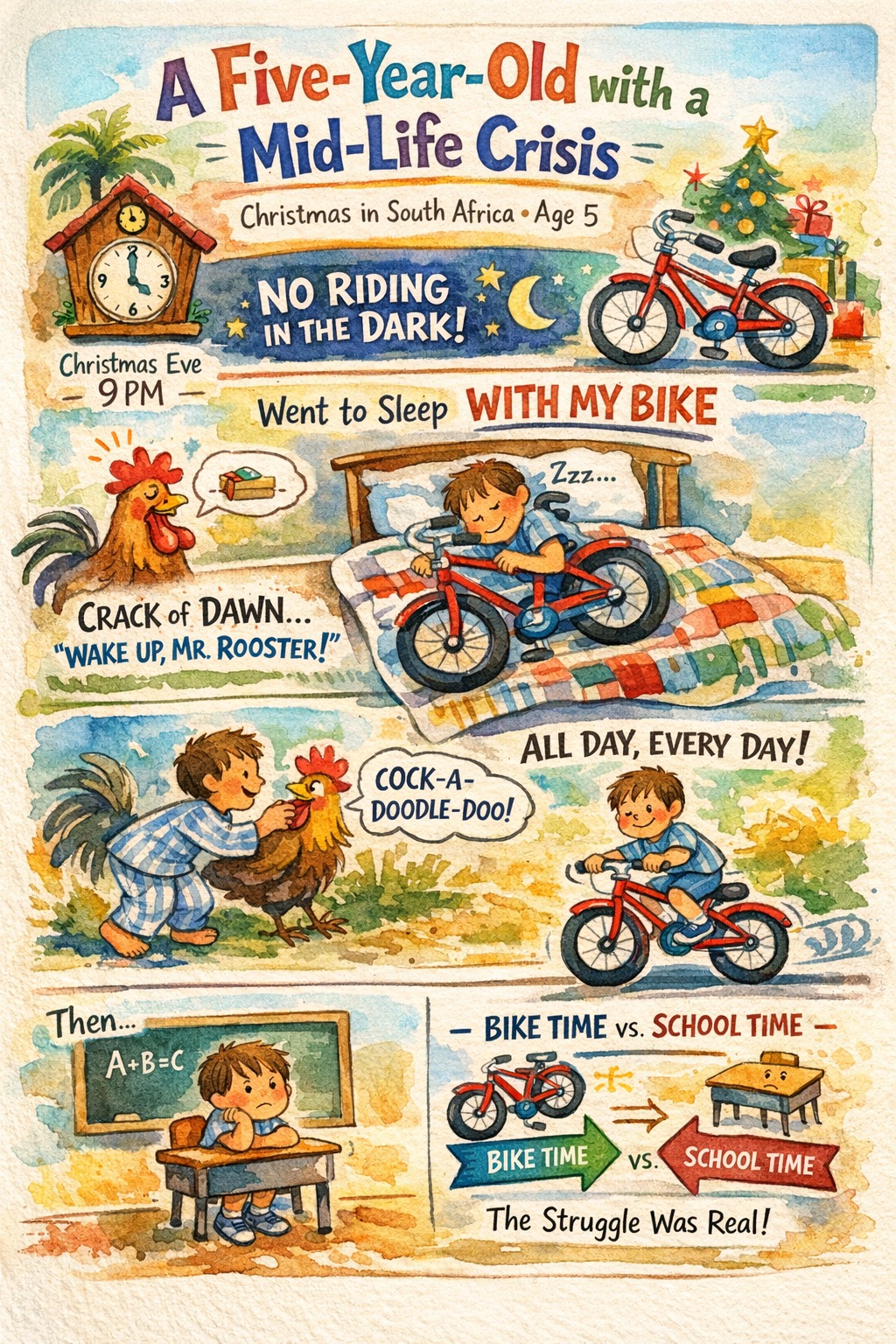
The next morning, I nudged the rooster to crow, and for the next two weeks, I was glued to that bike until bedtime. Then school started, and I had to share my biking hours with my school desk.

The best Christmas gift I can recall was my first bicycle at age five. In our German tradition, we received gifts on Christmas Eve and had to wait until after dark. It is summer in South Africa in December, so somewhere around 9 p.m., I finally got MY BIKE.

The rush of adrenaline, the novelty, the sense of wonder, the exploration, and the joy—all were stolen from me by the hard reality and tediousness of school. I entered what might be called a midlife crisis with regard to my bicycle.

Middle age in your pilgrimage follows the same pattern: excitement, exuberance, energy, and enthusiasm. Everything is new and thrilling. Then you get to know almost everything, and you realize the walk with Christ is not a casual stroll along the shores of the lake with free picnics and thrilling crowds; it requires selflessness and discipline.

My parents refused to let me ride it in the dark, so I went to sleep with it in my bed.

The next morning, I nudged the rooster to crow, and for the next two weeks, I was glued to that bike until bedtime. Then school started, and I had to share my biking hours with my school desk.

The rush of adrenaline, the novelty, the sense of wonder, the exploration, and the joy—all were stolen from me by the hard reality and tediousness of school. I entered what might be called a midlife crisis with regard to my bicycle.

Middle age in your pilgrimage follows the same pattern: excitement, exuberance, energy, and enthusiasm. Everything is new and thrilling. Then you get to know almost everything, and you realize the walk with Christ is not a casual stroll along the shores of the lake with free picnics and thrilling crowds; it requires selflessness and discipline.

When the Wonder Wears Off

The wonder of God’s love is breathtaking, but you can only hold your breath for so long, and after a while, the edge wears off. School starts. Ouch! Many drop out here entirely.

A middle-age crisis is a dangerous time. Weariness and dullness take hold, and one loses interest. Many abandon the pilgrimage at this point, so it is essential to know the symptoms and take urgent corrective measures.
A Cry for Renewal

This is the crisis Habakkuk addresses. “In the midst of the years revive; in the midst of the years make known”  

The repetition is significant; it is the way Hebrew emphasizes something. If you want to say the Grand Canyon, Hebrew would say, “the Canyon Canyon”. It is a crisis of a crisis, a rut that differs from a grave merely in depth.

Right Standing With God

Habakkuk continues: “…the person in right standing before God, through loyal and steady believing, is fully alive—really alive” (The Message). We need an upgrade.

Rediscovering the Ride

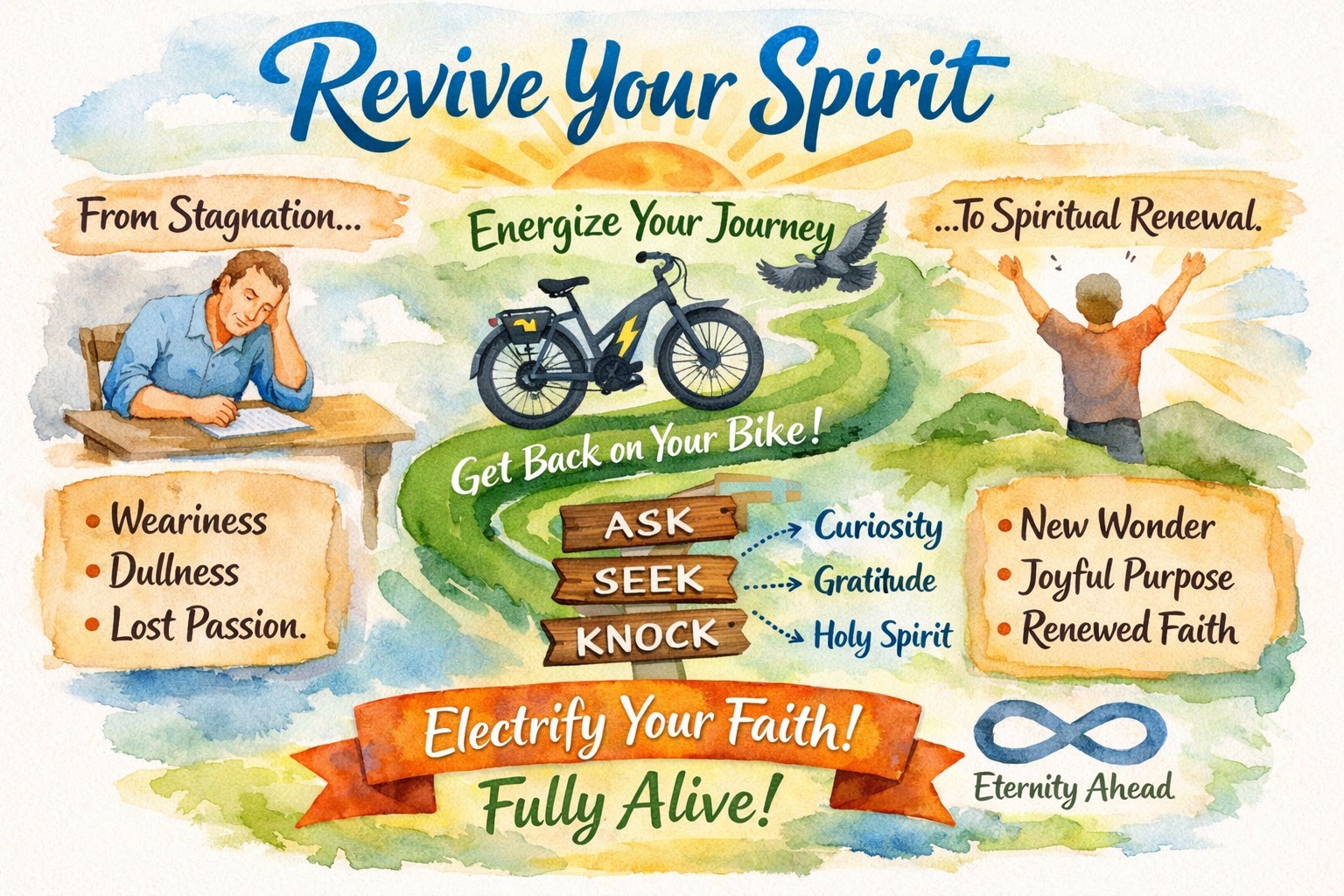
In my sixties, I bought another bicycle! The freedom to explore returned. It was still exuberant, but the decades had brought a new perspective. I was no longer enamored by the bike itself, but by the journey.

New destinations continually beckoned me. My limited walking radius of three miles an hour was instantly enlarged to a world of possibilities at ten-plus miles an hour. I rode with a smile of pure delight.

Electrified Living

Then came the innovation of an electric bike! A new wonder gripped me as new possibilities and options opened up. Suddenly, I wasn’t just working harder—I was going further.

This is the exact connotation of what it means to be “revived”. The way forward is simpler than you may imagine. The answer is not simply: “Work harder. Grit your teeth and continue with sheer determination”. If that is your strategy, you will burn out before the horizon. The answer is to “electrify” your experience.

A Marriage Awakens

Marriage provides a vivid illustration. Flying back from a speaking engagement, I began thinking about my marriage. It was in a midlife crisis. Seven years in, with two small children one year apart, a very busy solo pastorate with many teaching, administrative, and pastoral duties did not leave much time or energy.

How could I revive the fire? 

I began to reflect, and soon I was filled with gratitude. She was beautiful, kind, wise, generous, loyal, and humorous. Then I tried to recall all the special moments of joy we shared. Then I challenged myself to stand in her shoes and appreciate what she did routinely that I was overlooking.

What could she do that I was unable to do? What could I learn from her? 

I began to hunger to know her at a deeper level than the simple chemistry and hormones that had so vividly promoted our early passion. That original passion was ecstatic in its novelty, but it had grown stale because there were no new expectations.

The Power of Spiritual Electricity

You must start that same process with your thinking about God:

  • Start exploring His “hiddenness”.
  • Express gratitude for things He has done and is doing.
  • Cultivate curiosity – find people and read books that stoke your passion.

In short, get back on your bike—but with a different intention and a gifted energy.

Jesus gives us the blueprint for this spiritual electricity in Luke 11: “Ask, Seek, Knock”. The verbs are in the present continuous tense: “keep on, never stop, and always be asking, seeking, and knocking”. Practice it until, like riding a bicycle, wobbly at first, but ultimately requires no thinking, your response to life is to connect with God in every situation.

What are we seeking? The Holy Spirit. He is the electric energy of your spiritual experience. He doesn’t replace your pedaling; He elevates it to new possibilities.

Your Discovery Awaits

To start that stoking process, I challenge you to explore the dynamic the Holy Spirit brings to your own experience.

Remember: Eternity is the horizon. It will NEVER be boring.
Navigating the Darkness: From Anxiety to Peace

21 Feb

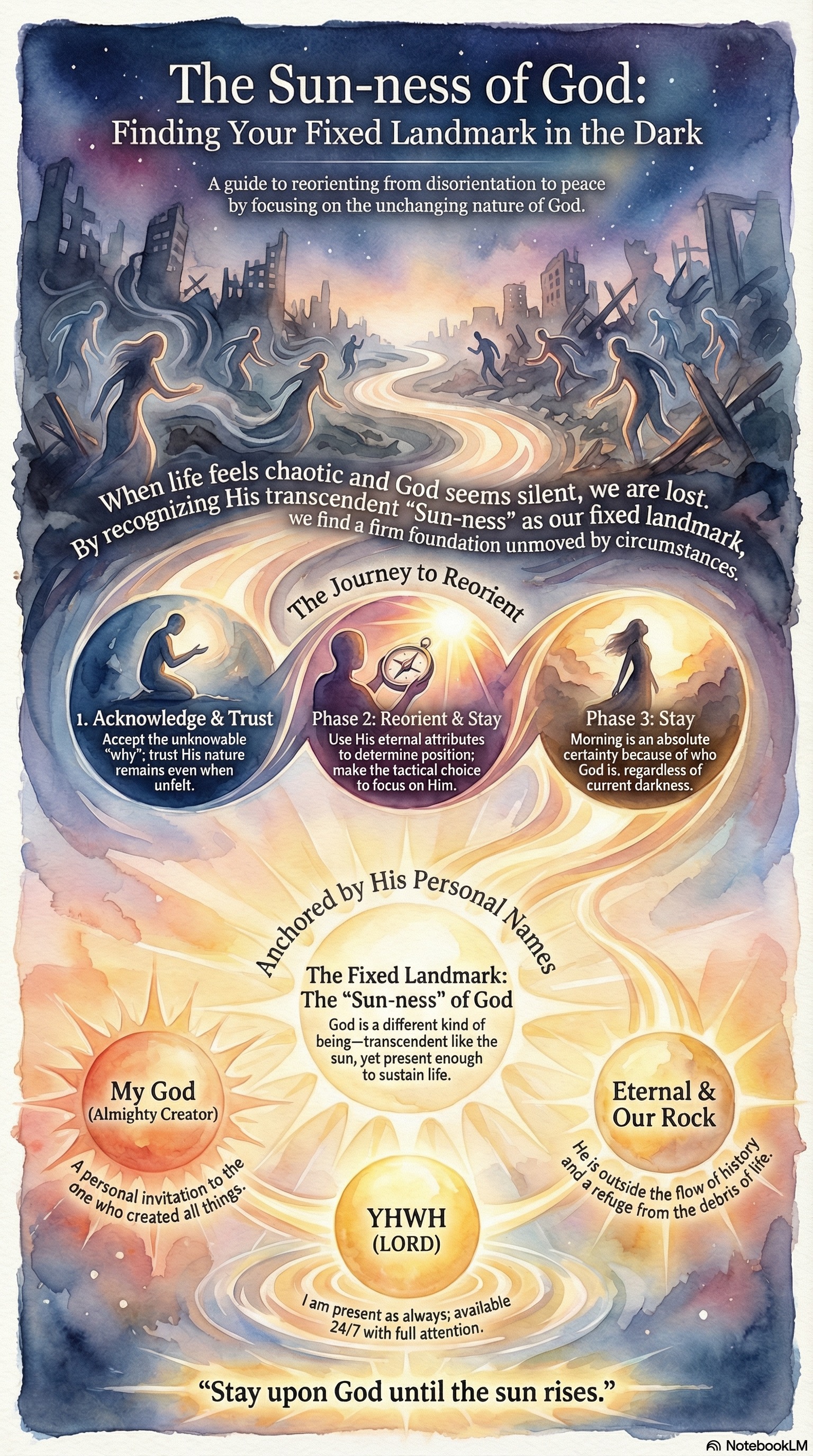
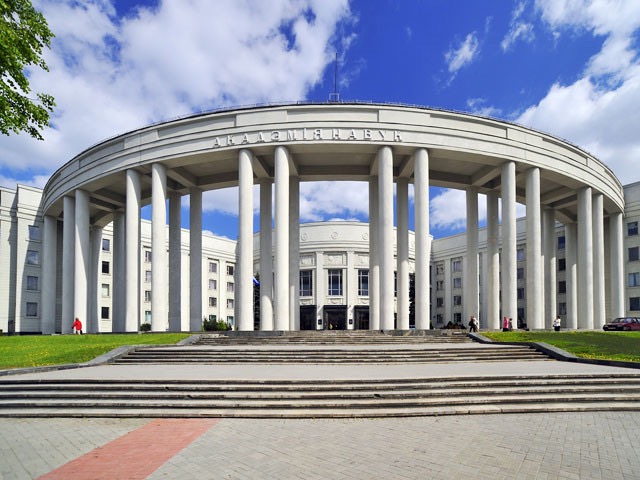
I once had the terrifying experience of getting lost in Minsk, Belorussia.. With rising panic, I tried to retrace my steps, but nothing registered. No one spoke English and people shrugged then ignored me when I asked for help, the signs were all in Cyrillic, the phone booths were stripped of equipment, bare wires protruding and smelling of urine. I felt doomed until, in entirely the wrong direction according to my perceptions, I saw the monument outside the metro station where I disembarked every morning on my way to teaching at The International Leadership Academy. The recognition of that landmark was the critical turning point that allowed me to reorient myself.Habakkuk 1:12–17 presents a crisis that every pilgrim eventually faces. It isn’t just that God is silent; it’s that His actions feel hostile—even evil. Habakkuk looks at the brutal Babylonians and anguishes over the mystery. “Why do You stand idly by while the wicked swallow up those more righteous than they?”

Pilgrims are disoriented by the mysterious ways of God, impacting their mindset and the trajectory of their lives. Pull out of the flow of alarmed thought, and switch your bewildered focus from the circumstances to God.

Habakkuk 1:12–17 presents a crisis that every pilgrim eventually faces. It isn’t just that God is silent; it’s that His actions feel hostile—even evil. Habakkuk looks at the brutal Babylonians and anguishes over the mystery. “Why do You stand idly by while the wicked swallow up those more righteous than they?” 

Pilgrims are disoriented by the mysterious ways of God, impacting their mindset and the trajectory of their lives. Pull out of the flow of alarmed thought, and switch your bewildered focus from the circumstances to God.

Stop! Look for a Landmark!

Notice Habakkuk’s  focus on God as Holy. “Lord, are you not from everlasting?  My God, my Holy One, you will never die.”

The “Sun-ness” of God: Holy means Distinct

To reorient, we must understand God as our landmark, specifically His holiness. Think of the difference between a drawing of the sun and the actual sun. You can look at a sketch, touch the paper, and understand its shape. But you cannot “touch” the sun; its heat, power, and brilliance would vaporise you long before you made contact.

Holiness is God’s “sun-ness.” He is not just a better version of us; He is a different kind of being entirely. However, this “otherness” does not mean He is inaccessible. Like the sun, God is too great to be controlled, but He is also too present to be ignored. The sun is 93 million miles away, yet its “sun-ness” is exactly what allows it to reach across the vacuum of space to sustain life. His transcendence (being above us) is precisely what makes His immanence (being with us) possible.

When you are lost  you must find a landmark that is fixed. Because God is “Holy”—the “Sun-ness” outside of our creation—He is the only truly fixed point. When Habakkuk stood on his watchtower, he didn’t look at the Babylonian army to find his peace; he looked at the “Sun-ness” of God.

To use this landmark:

  • Acknowledge: Accept that you cannot understand the “why” of every event. God begins where our data collection ends.
  • Trust: Even when you can’t feel the heat, the “Sun-ness” of God remains.
  • Reorient: Use His attributes to determine your position. If God is eternal, this crisis is temporary.

Distinct not Distant – The Personal Name: YHWH

“O LORD,” says Habakkuk. That is the personal name that God revealed to Moses when he tried to dodge going to tell Pharaoh, an absolute despot with no accountability, to let  “my people go.”  LORD (YHWH) describes His activity: “I am present as always,” available 24/7 with full attention. Unlike a human gatekeeper who might deny access, God’s attention is always full because His holiness tells us He is different.

Affirm these personal landmarks:

  • He is “LORD”. (YHWH) 
  • He is “MY God”: A personal pronoun; respond to the personal invitation.
  • He is”my GOD“: The Hebrew word means “Almighty Creator”.
  • He is “Eternal”: He is outside the ebb and flow of history.
  • He is “Our Rock”: A firm foundation – a refuge outside of the debris flow.

The Voice That Sustains the Weary

Isaiah 50 addresses the darkness from the perspective of the Servant—the voice that sustains the weary. This is not the rehearsed art of an orator; it is a voice that carries weight because the speaker is literally nailed to a cross in the darkness.

 During the unnatural night of the crucifixion, Jesus cries out in anguish: “My God, my God, why have you forsaken me?”  Yet, after that cry of abandonment eventually comes the calm, trusting voice of faith: “Into Your hands I commend my spirit.”

Jesus acts as the bridge between the “Sun-ness” of God and our human frailty. Just as the atmosphere allows us to experience the sun’s light without being consumed by its raw heat, He is the “radiance of God’s glory”—the brilliance of the sun brought down to eye level. He absorbed the darkness so that we might walk in the light.

When you find yourself in the “pitch-black room” of a personal crisis, the natural instinct is to scramble for a flashlight—to fix the problem, find an answer, or force a resolution. But Isaiah offers a different strategy for the pilgrim: Stay.

Staying Upon YHWH – Leaning against a Rock

Staying is not a sign of defeat; it is a tactical choice of focus. It is the refusal to let the chaos of the immediate “alarmed thoughts” drown out the reality of the fixed landmarks. By orienting yourself toward the “Sun-ness” of God, you recognize that while you are currently in the shadow, the Sun itself has not moved, dimmed, or changed.

You are leaning against a Rock that is higher than the debris flow. You are listening to a Voice that has already navigated the deepest darkness and emerged with a calm, commendatory faith.

If you are walking in darkness, stay upon God until the sun rises. For the pilgrim, the morning is not just a possibility; because of who God is, it is an absolute certainty, the one and only sure thing in a changing world.

The Babylonians still invade. Jerusalem was sacked. Captivity lasted seventy years.

But Habakkuk, as we shall see, was not sighing anymore, after seeing, he began singing. 

Stay tuned!

The Pilgrim’s Trajectory of Faith

14 Feb

 Habakkuk- a Modern 3000 Year Old Pilgrim

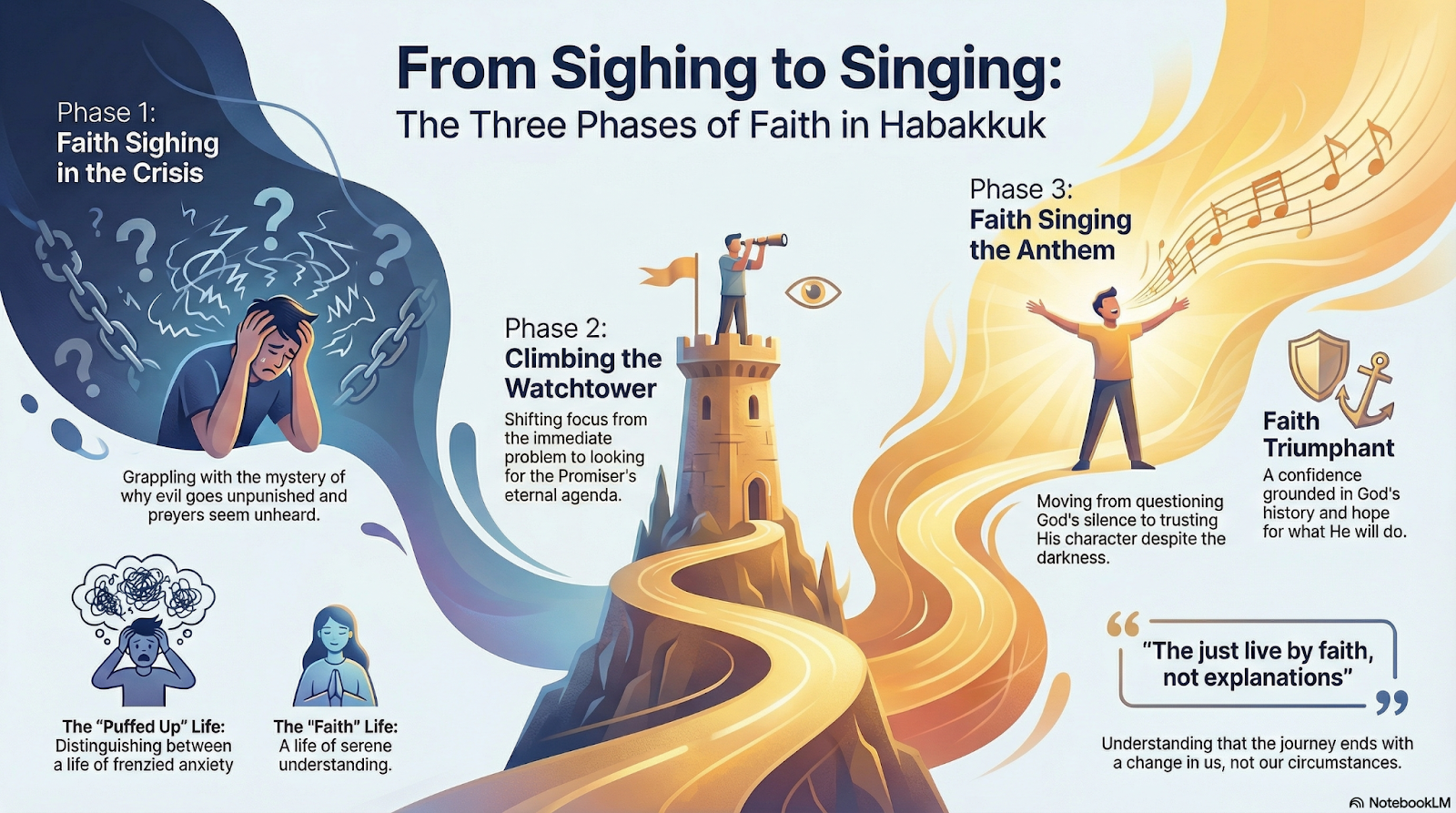
Faith Sighing in the Valley of Silence

The agonizing question: Where is God when the world burns? 

The Math Doesn’t Add Up:

– the confusing reality where evil goes unpunished;

– The unthinkable answer –  a brutal marauding army, raised up by God Himself.

 Pilgrims often find  their faith under fire, sighing in agonizing confusion.

 Faith Seeing from the Rampart

The Pilgrim trusts God and watches  and waits expectantly:

– Pilgrims avoid The “Puffed Up” restless approach, the impatient demand for an immediate answer.

– Pilgrims don’t live by what they can see right now; they live by who they know

Faith is faithfulness – it is a verb, not a noun. This is not passive sitting; it is active, as demonstrated in the Grand Finale.

Faith Singing in the Grand Finale

The journey ends not with a change in circumstances, but a change in the Pilgrim:

– The Pilgrim moves from questioning God’s silence to trusting His character. 

– This is faith triumphant—grounded in the history of what God has done, and confident in what He will do. 

The Pilgrim  no longer sighs at the mystery; even when suffering the ravages of a ruthless enemy. He sings in a rising crescendo:

I will still be joyful and glad,
    because the Lord God is my savior.

The Sovereign Lord gives me strength.
    He makes me sure-footed as a deer
    and keeps me safe on the mountains.  (Habakkuk 3:18-19)

This very modern 3000 year old book will be explored in six coming posts. Stay tuned.

The Pilgrim as Farmer

4 Feb

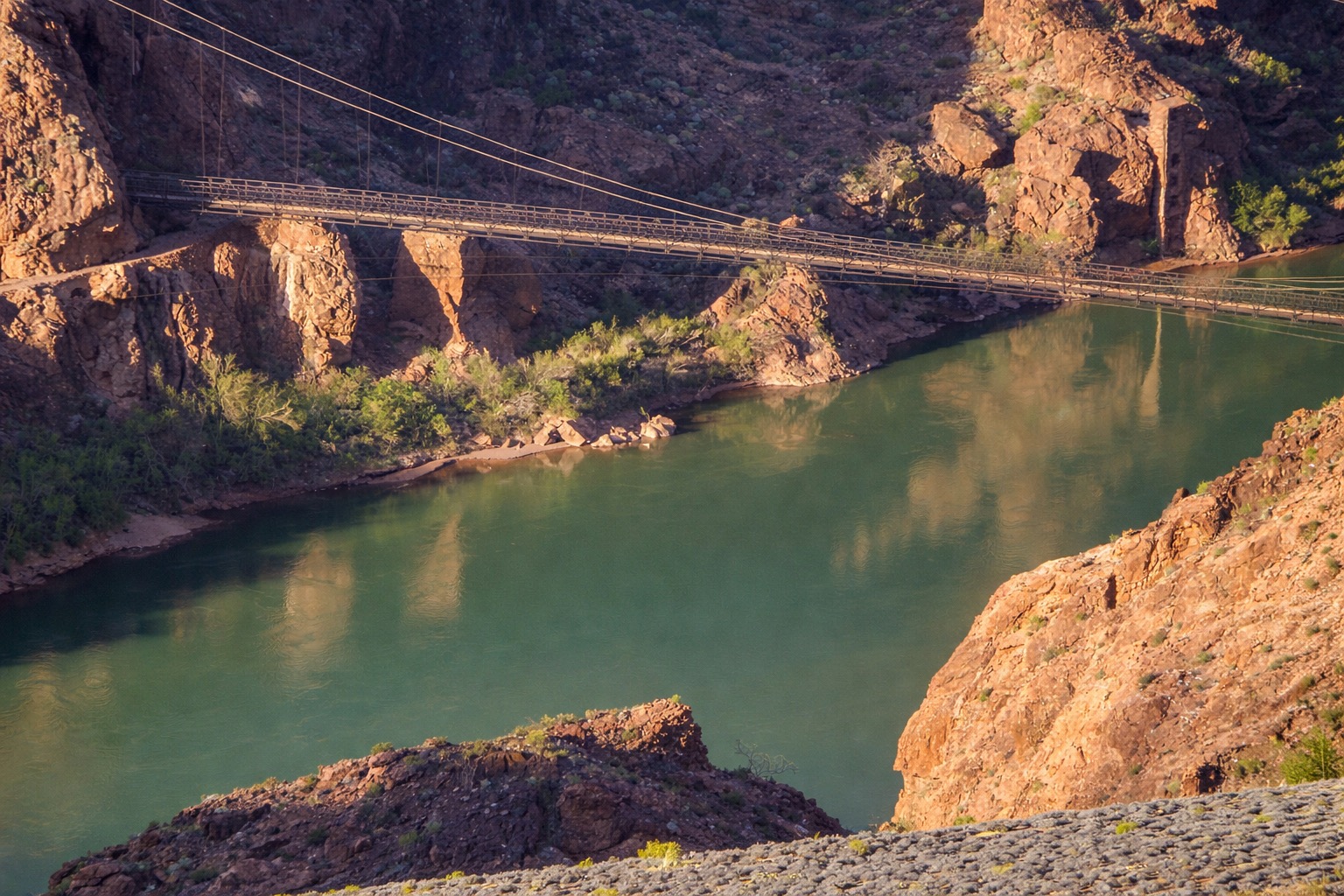
Bridge over Colorado River at Phantom Ranch

Planting Seeds While Passing Through

We often think of the spiritual life as a pilgrimage—a steady, linear walk toward a distant horizon. But in 2 Timothy 2:6, the Apostle Paul startles with an arresting contrast: – the pilgrim is a farmer.

At first glance, these identities seem at odds. A pilgrim is always moving; a farmer is rooted in the soil.If you just looked at the surface, you’d say, “You can’t be both!” But by investigating that paradox, an essential perspective comes into view: – we are called to work hard in our neighborhood(Farmer) while never forgetting that we don’t belong to it (Pilgrim).


Cultivating the “In-Between”

The Pilgrim has his eyes fixed, laser-like, on the destination. But he is not so heavenly minded as to be of no earthly use.

  • Whether it’s our careers, our families, our character, or our community, we are called to plow, plant, and weed with intentionality.
  • Farming is cultivation of the art of waiting. The pilgrim knows the road is long; the farmer knows the growth is slow. Together, they create a soul that isn’t discouraged by a lack of immediate results.

Eating What You Plant

God promises a harvest in this life: “The hardworking farmer ought to be the first to receive a share of the crops.”

This is the secret to spiritual endurance. As you plant seeds of kindness, patience, and truth in the lives of others, you are the first one nourished by them. The “crop” we cultivate on our journey—peace and joy—is exactly what fuels us to keep walking the difficult Pilgrim way with joy.

Patient Endurance

Farmers work for a harvest they cannot see yet. Pilgrims walk toward a home they haven’t yet reached. The present harvest sustains and energizes the Pilgrim.

I once walked from the North Rim to the South rim of the Grand Canyon. I had a pint of water and the advice was to take a gallon. I was badly dehydrating, my mouth dry and my tongue swelling. I was alarmed by my situation. To my relief a ranger appeared and offered me his bottle of water laced with gatorade. It invigorated me in indescribable ways. I set out with renewed energy and gratitude, all my symptoms swallowed up. I was enabled to finish, and to finish strong.

The Lessons:

Grow something beautiful in the soil of today while you keep your eyes on the destination of tomorrow.

Be refreshed by the Ranger, the Holy Spirit,   “Let anyone who is thirsty come to me and drink. Whoever believes in me, as Scripture has said, rivers of living water will flow from within them.” By this he meant the Spirit, whom those who believed in him were later to receive. (John 7:37-39 NIV)