Tag Archives: Habakkuk

A Five Year Old With a Mid-life Crisis

14 Apr

My parents refused to let me ride it in the dark, so I went to sleep with it in my bed.
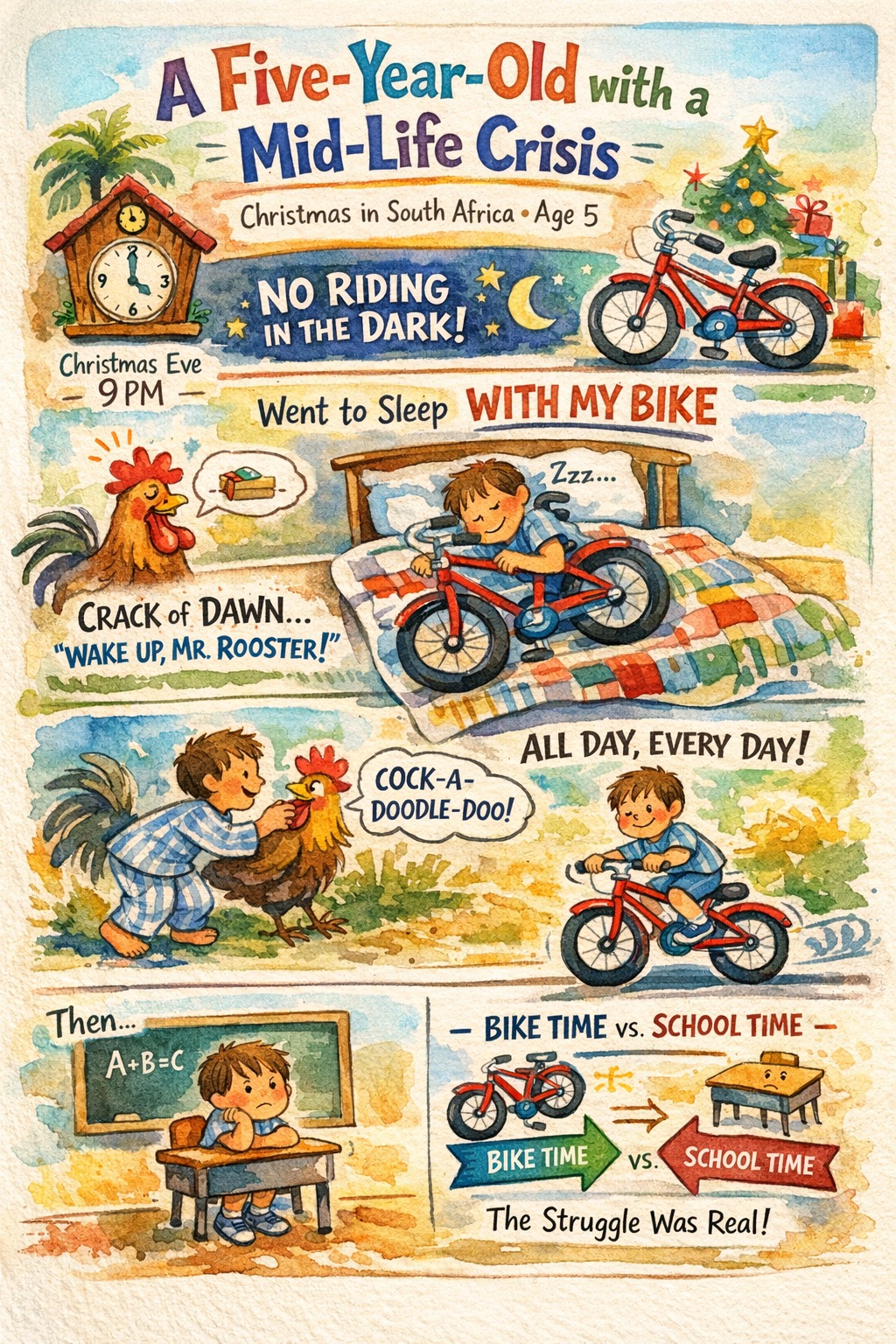
The next morning, I nudged the rooster to crow, and for the next two weeks, I was glued to that bike until bedtime. Then school started, and I had to share my biking hours with my school desk.

The best Christmas gift I can recall was my first bicycle at age five. In our German tradition, we received gifts on Christmas Eve and had to wait until after dark. It is summer in South Africa in December, so somewhere around 9 p.m., I finally got MY BIKE.

The rush of adrenaline, the novelty, the sense of wonder, the exploration, and the joy—all were stolen from me by the hard reality and tediousness of school. I entered what might be called a midlife crisis with regard to my bicycle.

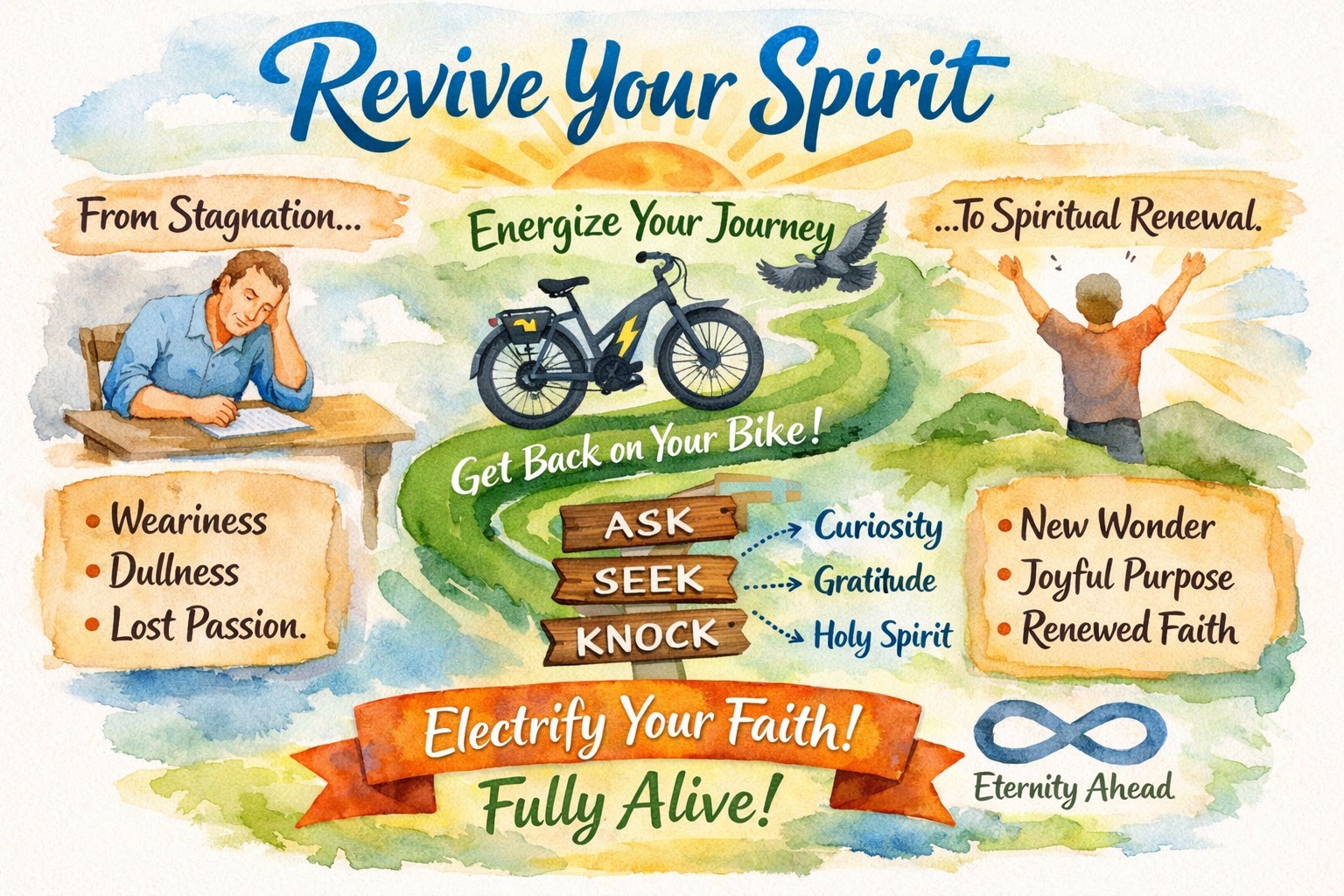
Middle age in your pilgrimage follows the same pattern: excitement, exuberance, energy, and enthusiasm. Everything is new and thrilling. Then you get to know almost everything, and you realize the walk with Christ is not a casual stroll along the shores of the lake with free picnics and thrilling crowds; it requires selflessness and discipline.

My parents refused to let me ride it in the dark, so I went to sleep with it in my bed.

The next morning, I nudged the rooster to crow, and for the next two weeks, I was glued to that bike until bedtime. Then school started, and I had to share my biking hours with my school desk.

The rush of adrenaline, the novelty, the sense of wonder, the exploration, and the joy—all were stolen from me by the hard reality and tediousness of school. I entered what might be called a midlife crisis with regard to my bicycle.

Middle age in your pilgrimage follows the same pattern: excitement, exuberance, energy, and enthusiasm. Everything is new and thrilling. Then you get to know almost everything, and you realize the walk with Christ is not a casual stroll along the shores of the lake with free picnics and thrilling crowds; it requires selflessness and discipline.

When the Wonder Wears Off

The wonder of God’s love is breathtaking, but you can only hold your breath for so long, and after a while, the edge wears off. School starts. Ouch! Many drop out here entirely.

A middle-age crisis is a dangerous time. Weariness and dullness take hold, and one loses interest. Many abandon the pilgrimage at this point, so it is essential to know the symptoms and take urgent corrective measures.
A Cry for Renewal

This is the crisis Habakkuk addresses. “In the midst of the years revive; in the midst of the years make known”  

The repetition is significant; it is the way Hebrew emphasizes something. If you want to say the Grand Canyon, Hebrew would say, “the Canyon Canyon”. It is a crisis of a crisis, a rut that differs from a grave merely in depth.

Right Standing With God

Habakkuk continues: “…the person in right standing before God, through loyal and steady believing, is fully alive—really alive” (The Message). We need an upgrade.

Rediscovering the Ride

In my sixties, I bought another bicycle! The freedom to explore returned. It was still exuberant, but the decades had brought a new perspective. I was no longer enamored by the bike itself, but by the journey.

New destinations continually beckoned me. My limited walking radius of three miles an hour was instantly enlarged to a world of possibilities at ten-plus miles an hour. I rode with a smile of pure delight.

Electrified Living

Then came the innovation of an electric bike! A new wonder gripped me as new possibilities and options opened up. Suddenly, I wasn’t just working harder—I was going further.

This is the exact connotation of what it means to be “revived”. The way forward is simpler than you may imagine. The answer is not simply: “Work harder. Grit your teeth and continue with sheer determination”. If that is your strategy, you will burn out before the horizon. The answer is to “electrify” your experience.

A Marriage Awakens

Marriage provides a vivid illustration. Flying back from a speaking engagement, I began thinking about my marriage. It was in a midlife crisis. Seven years in, with two small children one year apart, a very busy solo pastorate with many teaching, administrative, and pastoral duties did not leave much time or energy.

How could I revive the fire? 

I began to reflect, and soon I was filled with gratitude. She was beautiful, kind, wise, generous, loyal, and humorous. Then I tried to recall all the special moments of joy we shared. Then I challenged myself to stand in her shoes and appreciate what she did routinely that I was overlooking.

What could she do that I was unable to do? What could I learn from her? 

I began to hunger to know her at a deeper level than the simple chemistry and hormones that had so vividly promoted our early passion. That original passion was ecstatic in its novelty, but it had grown stale because there were no new expectations.

The Power of Spiritual Electricity

You must start that same process with your thinking about God:

  • Start exploring His “hiddenness”.
  • Express gratitude for things He has done and is doing.
  • Cultivate curiosity – find people and read books that stoke your passion.

In short, get back on your bike—but with a different intention and a gifted energy.

Jesus gives us the blueprint for this spiritual electricity in Luke 11: “Ask, Seek, Knock”. The verbs are in the present continuous tense: “keep on, never stop, and always be asking, seeking, and knocking”. Practice it until, like riding a bicycle, wobbly at first, but ultimately requires no thinking, your response to life is to connect with God in every situation.

What are we seeking? The Holy Spirit. He is the electric energy of your spiritual experience. He doesn’t replace your pedaling; He elevates it to new possibilities.

Your Discovery Awaits

To start that stoking process, I challenge you to explore the dynamic the Holy Spirit brings to your own experience.

Remember: Eternity is the horizon. It will NEVER be boring.
Faith Enables Perseverance

26 Feb

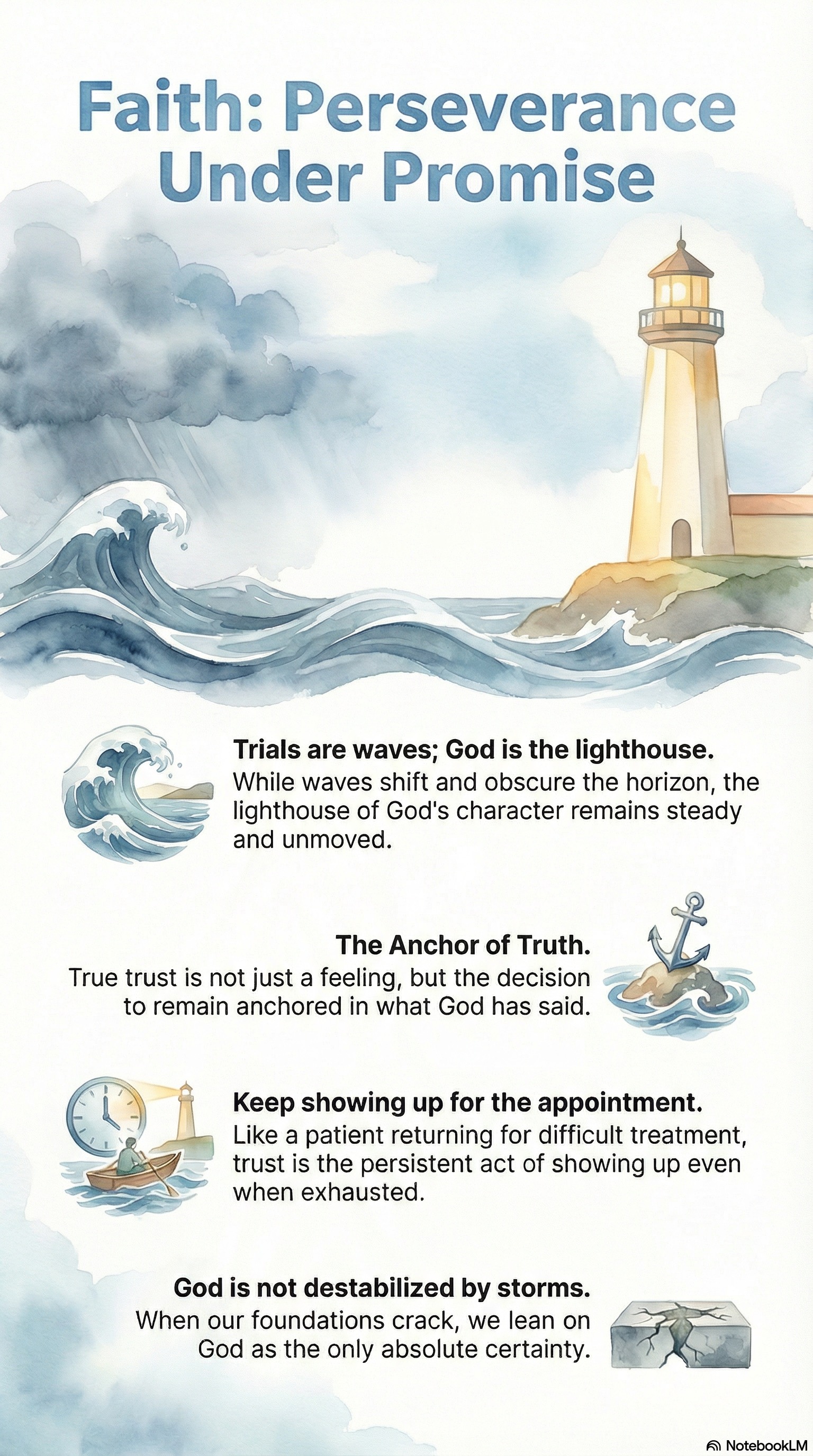
Imagine yourself in a small ship on a violent sea. Thunder splits the sky, and waves rise like mountains, dropping you into valleys so deep that the world disappears. In the trough of the wave, you see nothing but walls of shifting water; the horizon is gone, and the shore is a memory.

Then, a Word breaks through the roar of the storm, like a shaft of illumination from a lighthouse:

“For the earth will be filled with the knowledge of the glory of the Lord, as the waters cover the sea.” — Habakkuk 2:14

When you are in the trough, the light vanishes. You are surrounded by the spray and the dark. But as you crest the wave, you see it gain—steady, and unwavering. 

“But the Lord is in his holy temple; let all the earth keep silence before him.” — Habakkuk 2:20

The lighthouse never shifted; it did not flicker or fail. Only your position changed. These promises are beams of light from a distant, permanent shore.

Those who know God trust Him. When the foundation of our world begins to crack, we don’t lean on our circumstances; we lean on our deepest-held certainty: God as the only absolute. God is not destabilized by what destabilizes you.

Persevering Faith

I saw this lighthouse-faith in my friend Julia. She faced a rare and deadly metastasis of melanoma; what had begun on her skin had migrated to her lungs. There was no known treatment at the time. The prognosis was six months of life remaining.

Her physician proposed an aggressive, unproven course of action. There were no guarantees, only severe side effects and a slim margin of hope. In a profound act of surrender, Julia had faith in him and entrusted her life to his hands.

The path was brutal: thirteen chemotherapy cocktails, administered three weeks apart. Each infusion left her depleted for an entire week. Her skin burned a vivid red against her blonde hair. She had every reason to quit. As each appointment approached, the dread intensified. But she kept returning. Today, the cancer is defeated. She lives now with gratitude sharpened by the edge of survival.

The Anatomy of Trust

Julia’s faith was not merely what she professed with her lips; her faith was that she kept showing up. To abandon the treatment would have been to abandon confidence in the promise.

Habakkuk wrestled with this question: Can God be trusted in a collapsing world? In his day, national life was unstable and international powers were predatory. We live shaky lives in a shaking world that grows more shaky by the day.

Habakkuk anchored himself not in his circumstances, but in God’s character. He affirmed that God is Holy, God is the Rock, and God is enthroned. The lighthouse stands outside the storm; it is not subject to the tides.

Trust is not the repetition of a creed. It is the act of returning for the next appointment. It is enduring the side effects of a life of faith. It is standing in silence before the Lord when the waves rise high enough to obscure the light.

Faith is perseverance under promise.


Coming Next: From the Trough to the Tower

In the midst of the storm, we look for the Lighthouse to survive the next wave. But what happens when we step out of the ship and onto the solid ground of the Rampart?

Next, we’ll explore God’s word to Habakkuk – the just live their faith.—a posture of anticipation that sparked the Reformation, warmed the heart of John Wesley, and fueled the Great Awakening, and is the key to a full Christian experience. Don’t just endure the storm; learn how to watch for the dawn.

Navigating the Darkness: From Anxiety to Peace

21 Feb

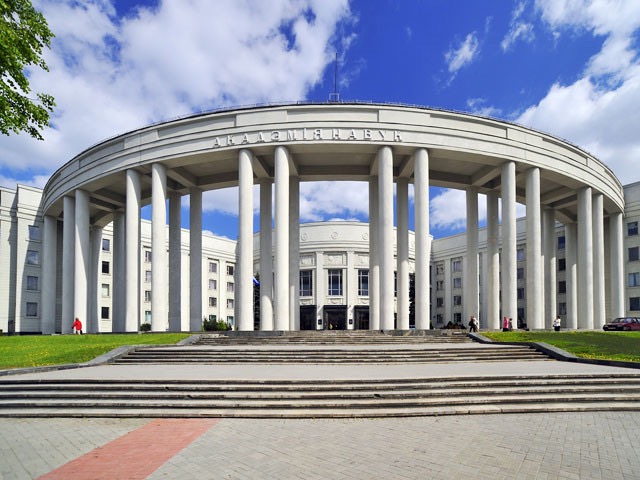
I once had the terrifying experience of getting lost in Minsk, Belorussia.. With rising panic, I tried to retrace my steps, but nothing registered. No one spoke English and people shrugged then ignored me when I asked for help, the signs were all in Cyrillic, the phone booths were stripped of equipment, bare wires protruding and smelling of urine. I felt doomed until, in entirely the wrong direction according to my perceptions, I saw the monument outside the metro station where I disembarked every morning on my way to teaching at The International Leadership Academy. The recognition of that landmark was the critical turning point that allowed me to reorient myself.Habakkuk 1:12–17 presents a crisis that every pilgrim eventually faces. It isn’t just that God is silent; it’s that His actions feel hostile—even evil. Habakkuk looks at the brutal Babylonians and anguishes over the mystery. “Why do You stand idly by while the wicked swallow up those more righteous than they?”

Pilgrims are disoriented by the mysterious ways of God, impacting their mindset and the trajectory of their lives. Pull out of the flow of alarmed thought, and switch your bewildered focus from the circumstances to God.

Habakkuk 1:12–17 presents a crisis that every pilgrim eventually faces. It isn’t just that God is silent; it’s that His actions feel hostile—even evil. Habakkuk looks at the brutal Babylonians and anguishes over the mystery. “Why do You stand idly by while the wicked swallow up those more righteous than they?” 

Pilgrims are disoriented by the mysterious ways of God, impacting their mindset and the trajectory of their lives. Pull out of the flow of alarmed thought, and switch your bewildered focus from the circumstances to God.

Stop! Look for a Landmark!

Notice Habakkuk’s  focus on God as Holy. “Lord, are you not from everlasting?  My God, my Holy One, you will never die.”

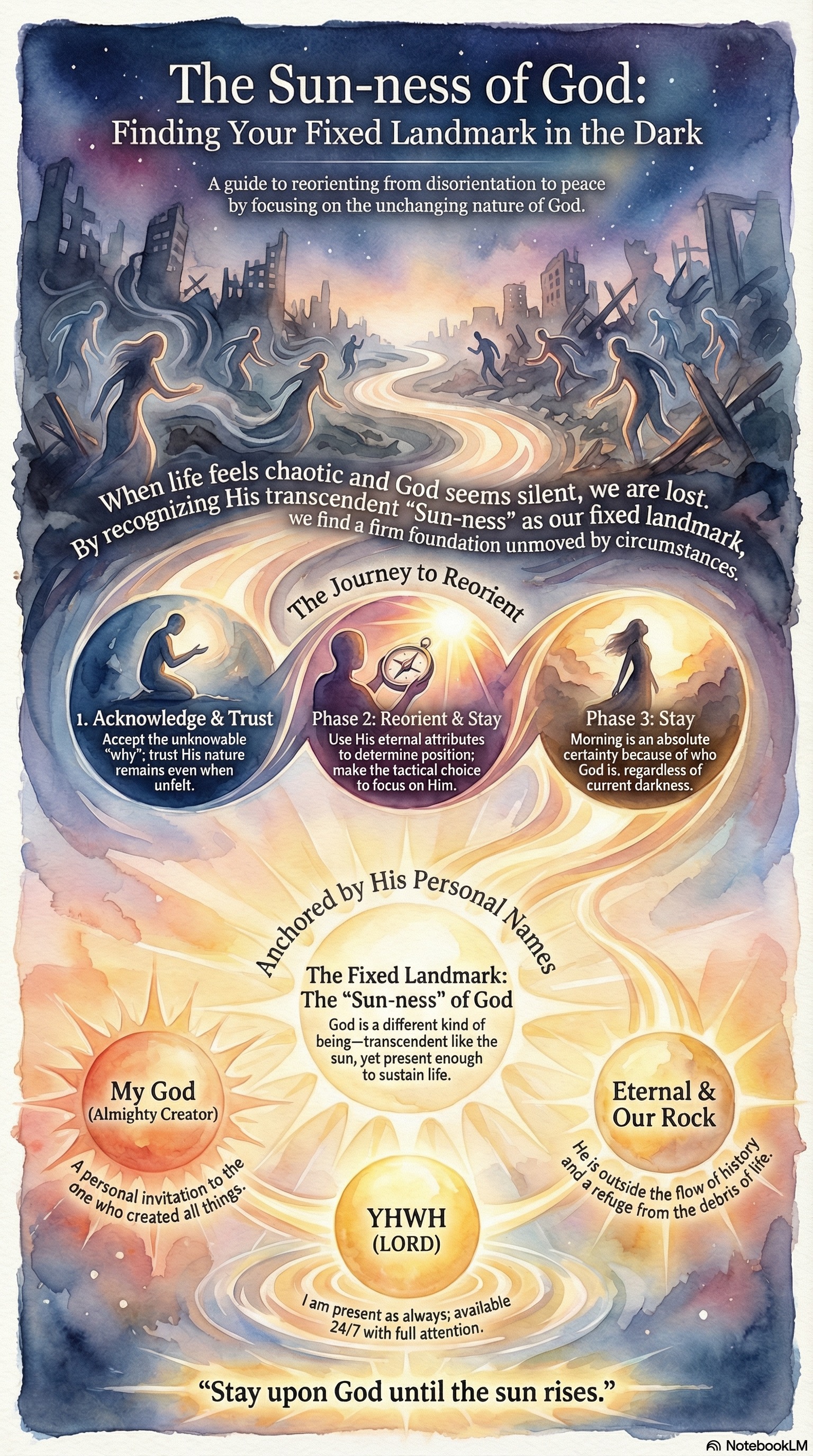
The “Sun-ness” of God: Holy means Distinct

To reorient, we must understand God as our landmark, specifically His holiness. Think of the difference between a drawing of the sun and the actual sun. You can look at a sketch, touch the paper, and understand its shape. But you cannot “touch” the sun; its heat, power, and brilliance would vaporise you long before you made contact.

Holiness is God’s “sun-ness.” He is not just a better version of us; He is a different kind of being entirely. However, this “otherness” does not mean He is inaccessible. Like the sun, God is too great to be controlled, but He is also too present to be ignored. The sun is 93 million miles away, yet its “sun-ness” is exactly what allows it to reach across the vacuum of space to sustain life. His transcendence (being above us) is precisely what makes His immanence (being with us) possible.

When you are lost  you must find a landmark that is fixed. Because God is “Holy”—the “Sun-ness” outside of our creation—He is the only truly fixed point. When Habakkuk stood on his watchtower, he didn’t look at the Babylonian army to find his peace; he looked at the “Sun-ness” of God.

To use this landmark:

  • Acknowledge: Accept that you cannot understand the “why” of every event. God begins where our data collection ends.
  • Trust: Even when you can’t feel the heat, the “Sun-ness” of God remains.
  • Reorient: Use His attributes to determine your position. If God is eternal, this crisis is temporary.

Distinct not Distant – The Personal Name: YHWH

“O LORD,” says Habakkuk. That is the personal name that God revealed to Moses when he tried to dodge going to tell Pharaoh, an absolute despot with no accountability, to let  “my people go.”  LORD (YHWH) describes His activity: “I am present as always,” available 24/7 with full attention. Unlike a human gatekeeper who might deny access, God’s attention is always full because His holiness tells us He is different.

Affirm these personal landmarks:

  • He is “LORD”. (YHWH) 
  • He is “MY God”: A personal pronoun; respond to the personal invitation.
  • He is”my GOD“: The Hebrew word means “Almighty Creator”.
  • He is “Eternal”: He is outside the ebb and flow of history.
  • He is “Our Rock”: A firm foundation – a refuge outside of the debris flow.

The Voice That Sustains the Weary

Isaiah 50 addresses the darkness from the perspective of the Servant—the voice that sustains the weary. This is not the rehearsed art of an orator; it is a voice that carries weight because the speaker is literally nailed to a cross in the darkness.

 During the unnatural night of the crucifixion, Jesus cries out in anguish: “My God, my God, why have you forsaken me?”  Yet, after that cry of abandonment eventually comes the calm, trusting voice of faith: “Into Your hands I commend my spirit.”

Jesus acts as the bridge between the “Sun-ness” of God and our human frailty. Just as the atmosphere allows us to experience the sun’s light without being consumed by its raw heat, He is the “radiance of God’s glory”—the brilliance of the sun brought down to eye level. He absorbed the darkness so that we might walk in the light.

When you find yourself in the “pitch-black room” of a personal crisis, the natural instinct is to scramble for a flashlight—to fix the problem, find an answer, or force a resolution. But Isaiah offers a different strategy for the pilgrim: Stay.

Staying Upon YHWH – Leaning against a Rock

Staying is not a sign of defeat; it is a tactical choice of focus. It is the refusal to let the chaos of the immediate “alarmed thoughts” drown out the reality of the fixed landmarks. By orienting yourself toward the “Sun-ness” of God, you recognize that while you are currently in the shadow, the Sun itself has not moved, dimmed, or changed.

You are leaning against a Rock that is higher than the debris flow. You are listening to a Voice that has already navigated the deepest darkness and emerged with a calm, commendatory faith.

If you are walking in darkness, stay upon God until the sun rises. For the pilgrim, the morning is not just a possibility; because of who God is, it is an absolute certainty, the one and only sure thing in a changing world.

The Babylonians still invade. Jerusalem was sacked. Captivity lasted seventy years.

But Habakkuk, as we shall see, was not sighing anymore, after seeing, he began singing. 

Stay tuned!

Navigating Life When Faith Doesn’t Make Sense

17 Feb

Pilgrim in Process: When Faith Sighs

Navigating the Salt Basins and High Sierra Peaks

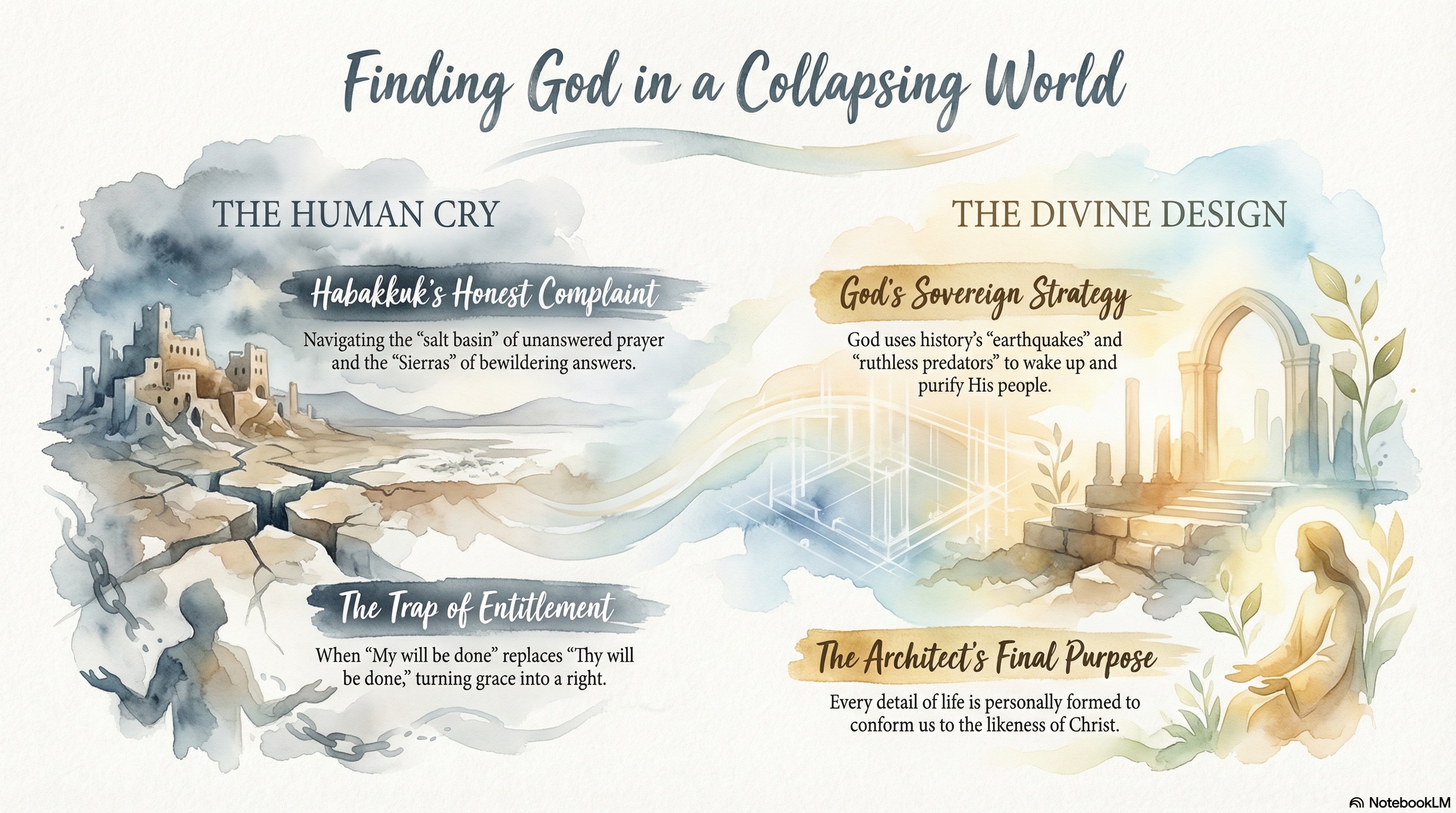
The pioneers who trekked across the salt basin in Utah and crossed the Sierras faced obstacles that killed some and turned others back. For the spiritual pilgrim, the journey involves similar barriers: the salt basin represents unanswered prayer, while the Sierras represent answers to prayer. It may seem counterintuitive, but answers to prayer can often become our greatest obstacles. Every prayer is answered—whether granted, refused, or delayed—but it is the “bewildering answers” that are completely unacceptable to us that cause us to stumble.

1. The Human Cry

Habakkuk’s ancient frustration feels remarkably modern. He looked at a world where destruction and violence were constant, strife abounded, and the law seemed paralyzed. His cry was raw and honest: “How long, Lord, must I call for help, but you do not listen? Or cry out to you, ‘Violence!’ but you do not save?”. Habakkuk was not posing abstract theological riddles; his world was literally crumbling. The nation was decaying from within, and a ruthless predator was approaching from without.

Practical Application: Don’t be afraid to bring your “sighs” to God. Habakkuk’s example shows that faith often begins with an honest complaint about the injustice and wrongdoing we see in our own lives and the world.

2. The Shocking Answer

When God finally answered Habakkuk, it was a “geopolitical earthquake”. God told him to be “utterly amazed” because He was doing something unbelievable: He was raising up the Babylonians. God described them as a “ruthless and impetuous people,” a “feared and dreaded” nation that promoted their own honor and worshiped their own strength as their god. Habakkuk had to wrestle with the reality that God was personally behind the rise of a ruthless enemy marching toward Jerusalem.

Personal Touch: It is a staggering thought that God’s answer to our cry for help might be to send a “Babylonian”—a difficult circumstance or a person that acts as a “wake-up call” when we have grown “dull of hearing”.

3. The Entitlement Trap

Why do we stumble over these shocking answers? Often, it is because we fall into a trap of entitlement. Just as a teenager might turn a one-time relaxed curfew into a “right” or a “bargaining chip,” we often turn God’s grace into a personal merit that we feel we have earned. This logic thrives whenever “My will be done” replaces “Thy will be done”. When this happens, we begin to view God as a “Supermarket” where blessings are expected on demand—an ornament to our lives rather than the sovereign Lord.

Practical Application: Take a moment to audit your prayers. Are you treating God as a Sovereign Lord to be trusted, or as a “Supermarket” where you are shopping for conveniences? Entitlement produces anger when refused; faith produces trust.

4. The Grand Design

Scripture reveals that history is not a chain of random events, but a Grand Design arranged toward redemption. In the “fullness of time,” God used centuries of preparation—Greek language, Roman roads and order, philosophical curiosity, spiritual desire awakened—to weave His redemptive plan.

If God carefully directs the rise of empires, His purpose reaches into the details of our personal lives to conform us to the likeness of Christ.

  • God is the Architect; you are the campus.
  • The “bulldozers, sawdust, and nail guns” of life are not signs of destruction, but the Architect’s tools serving an eternal purpose.
  • These trials become the “steel framework” of your life—a bulwark against life’s storms.

As a Pilgrim in Process, we must learn that prayer matures from making demands to seeking intimacy. The goal is not to bend God to our will, but to know Him, trust Him, and rest in His purposes.

Does the idea of God as an “Architect” change how you view the “bulldozers” currently at work in your own life? Which are you facing right now: a silent “salt basin” or a “Sierra peak” answer that feels like an obstacle?

Let’s Talk

I would love this to become a conversation. Please share your anecdotes, questions and insights in the comments.

Points to Ponder

In the context of your “Pilgrim in Process” journey, do you find that your current “sighs” are born out of a frustration that God isn’t following your blueprint, or a desire to understand His?

Does the idea of God as an “Architect” change how you view the “bulldozers” currently at work in your own life? I’d love to hear your thoughts on how you navigate those “salt basins” of unanswered prayer.

Avoiding Worry in Chaotic Times

3 Apr

War, terrorism, refugees, famine, climate change, political polarity, shootings, road rage, dictators, (insert your own nightmares here) all tangled up in our consciousness like roots in mangrove swamp, \making our walk torturous and dangerous.

Inside of me is a resigned paralysis. I am bewildered, not just by the outward circumstances, but by the murmuring of my anxious heart that seems arrhythmic right now, and worse, by the strong, even violent, unChristlike thoughts and emotions that overwhelm me at times.

I responded: “No. But a great idea! I will start thinking about it. I think it’s a process of resting in God every time the anxiety registers at a conscious level. I mean deliberately and then persisting. You got any ideas? Some scriptures spring to mind: Phil 4 (be anxious for nothing); 1 Peter (casting all your care on Him); Can you by thought add a cubit to your stature – consider the lilies (Jesus in Sermon on Mount). Maybe something on how to love them that hate you as well as those who distress you. How to turn worry into relaxed concern? “

Inside of me is a resigned paralysis. I am bewildered, not just by the outward circumstances, but by the murmuring of my anxious heart that seems arrhythmic right now, and worse, by the strong, even violent, unChristlike thoughts and emotions that overwhelm me at timesJoan Kruger wrote:  “So Anton, have you thought about doing a series on how to let go of one’s rising anxiety level during this election?  Would help a whole lot of people!” 

Joan: “You made me laugh. What really got me going was the Habakkuk study. Totally paraphrasing. God why aren’t you doing anything with these evil people. God, I’m using them to bring you back to me.  And guess what, you ain’t seen anything yet. My point is more that God is using the world’s turmoil for our good and to advance His kingdom but turmoil, even for our good, can be painful.””

So with Joan as a collaborator, here we go.

A Map of the Journey

Entering a wilderness without a map is lunacy. It is dangerous lunacy, survival is at stake.

It is my prayer that these articles will provide a map so that we can gain insight and grow. I do not think we will ever fully understand, always seeing through glass, coated with sticky smoke from the wildfires, until we see Him Face to face in glory, but distress is dealt with in numerous ways that will hopefully provide secure stepping stones through the quicksands.

Let’s keep our concentration on these scriptural stones.

Habakkuk says he rushed to the Temple to await God’s response, and Asaph the Psalmist  was deeply distressed by the prosperity of the wicked until … he entered the temple:

Surely God is good to Israel,
    to those who are pure in heart.

But as for me, (not sure pure of heart) my feet had almost slipped;
    I had nearly lost my foothold.
For I envied the arrogant
    when I saw the prosperity of the wicked.

They have no struggles;
    their bodies are healthy and strong. 

They are free from common human burdens;
    they are not plagued by human ills. 

Surely in vain I have kept my heart pure
    and have washed my hands in innocence.

All day long I have been afflicted,
    and every morning brings new punishments.

When I tried to understand all this,
    it troubled me deeply…

… UNTIL

Until …  I entered the sanctuary of God (Psalm 73 NIV)

Always, The First Response, Always

Set the problem to one side, and go straight into the Presence of God. He will enable you “to be still, and know that I am God” (Psalm 46:10). This is so important, because it immediately changes the context, putting the issue into the background and God in the forefront. Now the problem is no longer free to float in the frame of your life with its limitations, but is placed in the orbit of God’s infinite care. You can heave a sigh of relief and let go while you figure out the next step with your Heavenly Guide navigating  the map of God’s Word.

HINDS FEET ON HIGH PLACES

Earlier Habakkuk said:

 “ … will climb up to my watchtower

    and stand at my guardpost.

There I will wait to see what the Lord says

    and how he[a] will answer my complaint.” (Hab 2:1 NLT)

concludes in a similar way:

YET 

Yet I will rejoice in the Lord!

    I will be joyful in the God of my salvation!

The Sovereign Lord is my strength!

    He makes me as surefooted as a deer, 

    able to tread upon the heights. (Hab 3:18 NLT)

Life is not lived from an armchair, it is a journey, sometimes in a jolting stagecoach through rough terrain with masked bandits committing life threatening hold ups. 

A map with an experienced guide is getting the best of two worlds. 

May these meditations be like oasis’ on the map, and may the Holy Spirit be your guide.