Tag Archives: Anxiety

A Five Year Old With a Mid-life Crisis

14 Apr

My parents refused to let me ride it in the dark, so I went to sleep with it in my bed.

The next morning, I nudged the rooster to crow, and for the next two weeks, I was glued to that bike until bedtime. Then school started, and I had to share my biking hours with my school desk.

The best Christmas gift I can recall was my first bicycle at age five. In our German tradition, we received gifts on Christmas Eve and had to wait until after dark. It is summer in South Africa in December, so somewhere around 9 p.m., I finally got MY BIKE.

The rush of adrenaline, the novelty, the sense of wonder, the exploration, and the joy—all were stolen from me by the hard reality and tediousness of school. I entered what might be called a midlife crisis with regard to my bicycle.

Middle age in your pilgrimage follows the same pattern: excitement, exuberance, energy, and enthusiasm. Everything is new and thrilling. Then you get to know almost everything, and you realize the walk with Christ is not a casual stroll along the shores of the lake with free picnics and thrilling crowds; it requires selflessness and discipline.

My parents refused to let me ride it in the dark, so I went to sleep with it in my bed.

The next morning, I nudged the rooster to crow, and for the next two weeks, I was glued to that bike until bedtime. Then school started, and I had to share my biking hours with my school desk.

The rush of adrenaline, the novelty, the sense of wonder, the exploration, and the joy—all were stolen from me by the hard reality and tediousness of school. I entered what might be called a midlife crisis with regard to my bicycle.

Middle age in your pilgrimage follows the same pattern: excitement, exuberance, energy, and enthusiasm. Everything is new and thrilling. Then you get to know almost everything, and you realize the walk with Christ is not a casual stroll along the shores of the lake with free picnics and thrilling crowds; it requires selflessness and discipline.

When the Wonder Wears Off

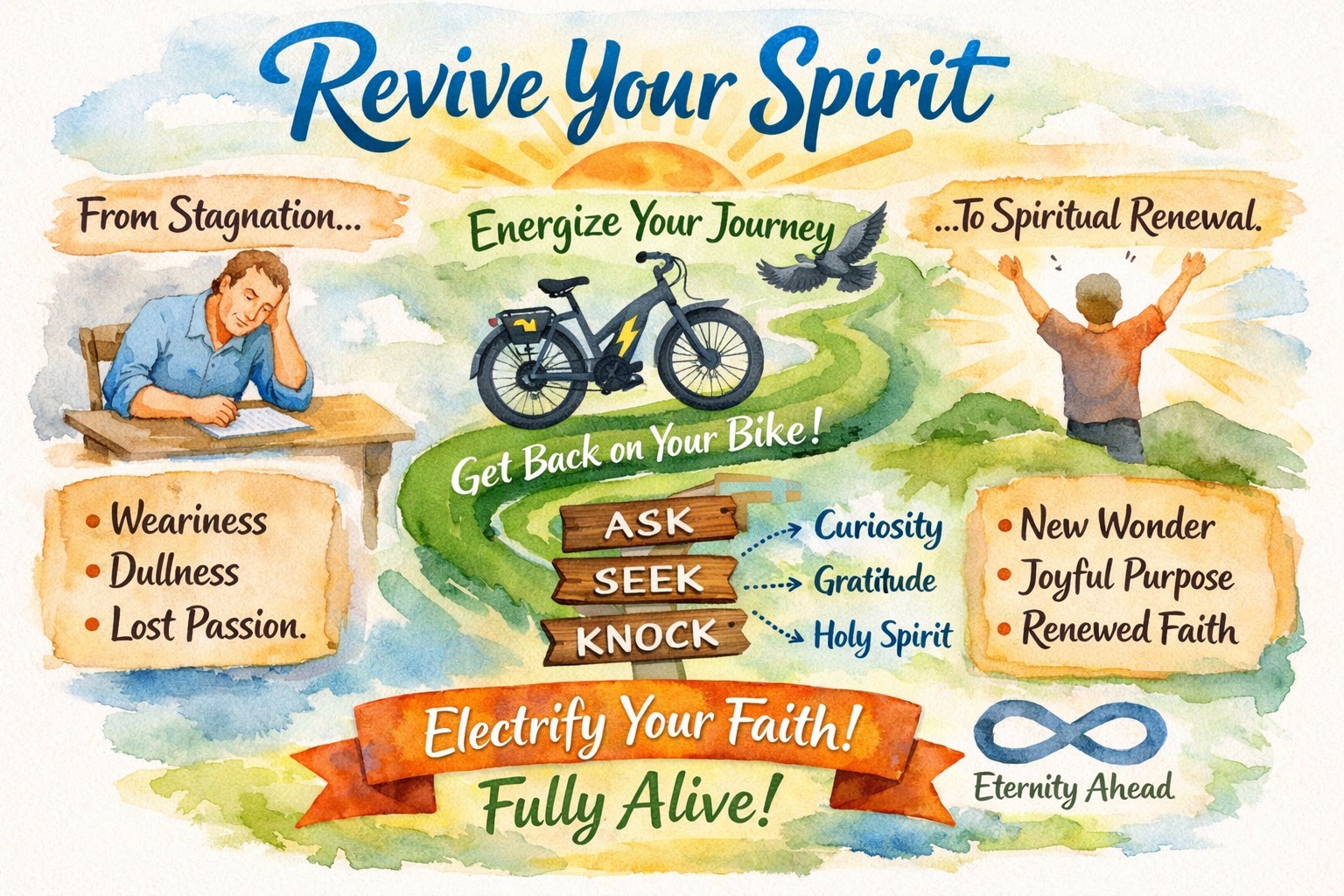
The wonder of God’s love is breathtaking, but you can only hold your breath for so long, and after a while, the edge wears off. School starts. Ouch! Many drop out here entirely.

A middle-age crisis is a dangerous time. Weariness and dullness take hold, and one loses interest. Many abandon the pilgrimage at this point, so it is essential to know the symptoms and take urgent corrective measures.
A Cry for Renewal

This is the crisis Habakkuk addresses. “In the midst of the years revive; in the midst of the years make known”  

The repetition is significant; it is the way Hebrew emphasizes something. If you want to say the Grand Canyon, Hebrew would say, “the Canyon Canyon”. It is a crisis of a crisis, a rut that differs from a grave merely in depth.

Right Standing With God

Habakkuk continues: “…the person in right standing before God, through loyal and steady believing, is fully alive—really alive” (The Message). We need an upgrade.

Rediscovering the Ride

In my sixties, I bought another bicycle! The freedom to explore returned. It was still exuberant, but the decades had brought a new perspective. I was no longer enamored by the bike itself, but by the journey.

New destinations continually beckoned me. My limited walking radius of three miles an hour was instantly enlarged to a world of possibilities at ten-plus miles an hour. I rode with a smile of pure delight.

Electrified Living

Then came the innovation of an electric bike! A new wonder gripped me as new possibilities and options opened up. Suddenly, I wasn’t just working harder—I was going further.

This is the exact connotation of what it means to be “revived”. The way forward is simpler than you may imagine. The answer is not simply: “Work harder. Grit your teeth and continue with sheer determination”. If that is your strategy, you will burn out before the horizon. The answer is to “electrify” your experience.

A Marriage Awakens

Marriage provides a vivid illustration. Flying back from a speaking engagement, I began thinking about my marriage. It was in a midlife crisis. Seven years in, with two small children one year apart, a very busy solo pastorate with many teaching, administrative, and pastoral duties did not leave much time or energy.

How could I revive the fire? 

I began to reflect, and soon I was filled with gratitude. She was beautiful, kind, wise, generous, loyal, and humorous. Then I tried to recall all the special moments of joy we shared. Then I challenged myself to stand in her shoes and appreciate what she did routinely that I was overlooking.

What could she do that I was unable to do? What could I learn from her? 

I began to hunger to know her at a deeper level than the simple chemistry and hormones that had so vividly promoted our early passion. That original passion was ecstatic in its novelty, but it had grown stale because there were no new expectations.

The Power of Spiritual Electricity

You must start that same process with your thinking about God:

  • Start exploring His “hiddenness”.
  • Express gratitude for things He has done and is doing.
  • Cultivate curiosity – find people and read books that stoke your passion.

In short, get back on your bike—but with a different intention and a gifted energy.

Jesus gives us the blueprint for this spiritual electricity in Luke 11: “Ask, Seek, Knock”. The verbs are in the present continuous tense: “keep on, never stop, and always be asking, seeking, and knocking”. Practice it until, like riding a bicycle, wobbly at first, but ultimately requires no thinking, your response to life is to connect with God in every situation.

What are we seeking? The Holy Spirit. He is the electric energy of your spiritual experience. He doesn’t replace your pedaling; He elevates it to new possibilities.

Your Discovery Awaits

To start that stoking process, I challenge you to explore the dynamic the Holy Spirit brings to your own experience.

Remember: Eternity is the horizon. It will NEVER be boring.

Navigating the Darkness: From Anxiety to Peace

21 Feb

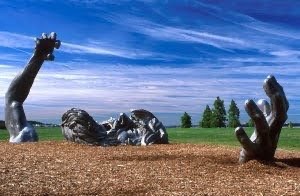
I once had the terrifying experience of getting lost in Minsk, Belorussia.. With rising panic, I tried to retrace my steps, but nothing registered. No one spoke English and people shrugged then ignored me when I asked for help, the signs were all in Cyrillic, the phone booths were stripped of equipment, bare wires protruding and smelling of urine. I felt doomed until, in entirely the wrong direction according to my perceptions, I saw the monument outside the metro station where I disembarked every morning on my way to teaching at The International Leadership Academy. The recognition of that landmark was the critical turning point that allowed me to reorient myself.Habakkuk 1:12–17 presents a crisis that every pilgrim eventually faces. It isn’t just that God is silent; it’s that His actions feel hostile—even evil. Habakkuk looks at the brutal Babylonians and anguishes over the mystery. “Why do You stand idly by while the wicked swallow up those more righteous than they?”

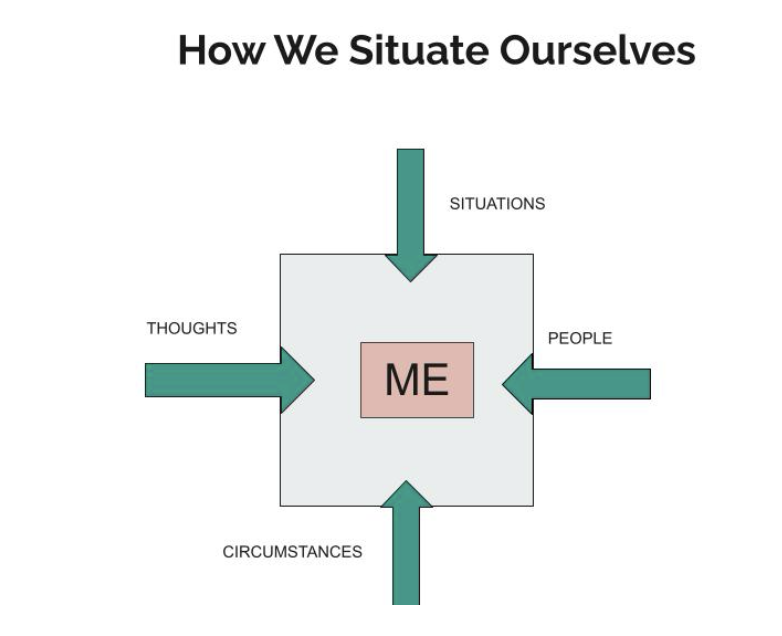
Pilgrims are disoriented by the mysterious ways of God, impacting their mindset and the trajectory of their lives. Pull out of the flow of alarmed thought, and switch your bewildered focus from the circumstances to God.

Habakkuk 1:12–17 presents a crisis that every pilgrim eventually faces. It isn’t just that God is silent; it’s that His actions feel hostile—even evil. Habakkuk looks at the brutal Babylonians and anguishes over the mystery. “Why do You stand idly by while the wicked swallow up those more righteous than they?” 

Pilgrims are disoriented by the mysterious ways of God, impacting their mindset and the trajectory of their lives. Pull out of the flow of alarmed thought, and switch your bewildered focus from the circumstances to God.

Stop! Look for a Landmark!

Notice Habakkuk’s  focus on God as Holy. “Lord, are you not from everlasting?  My God, my Holy One, you will never die.”

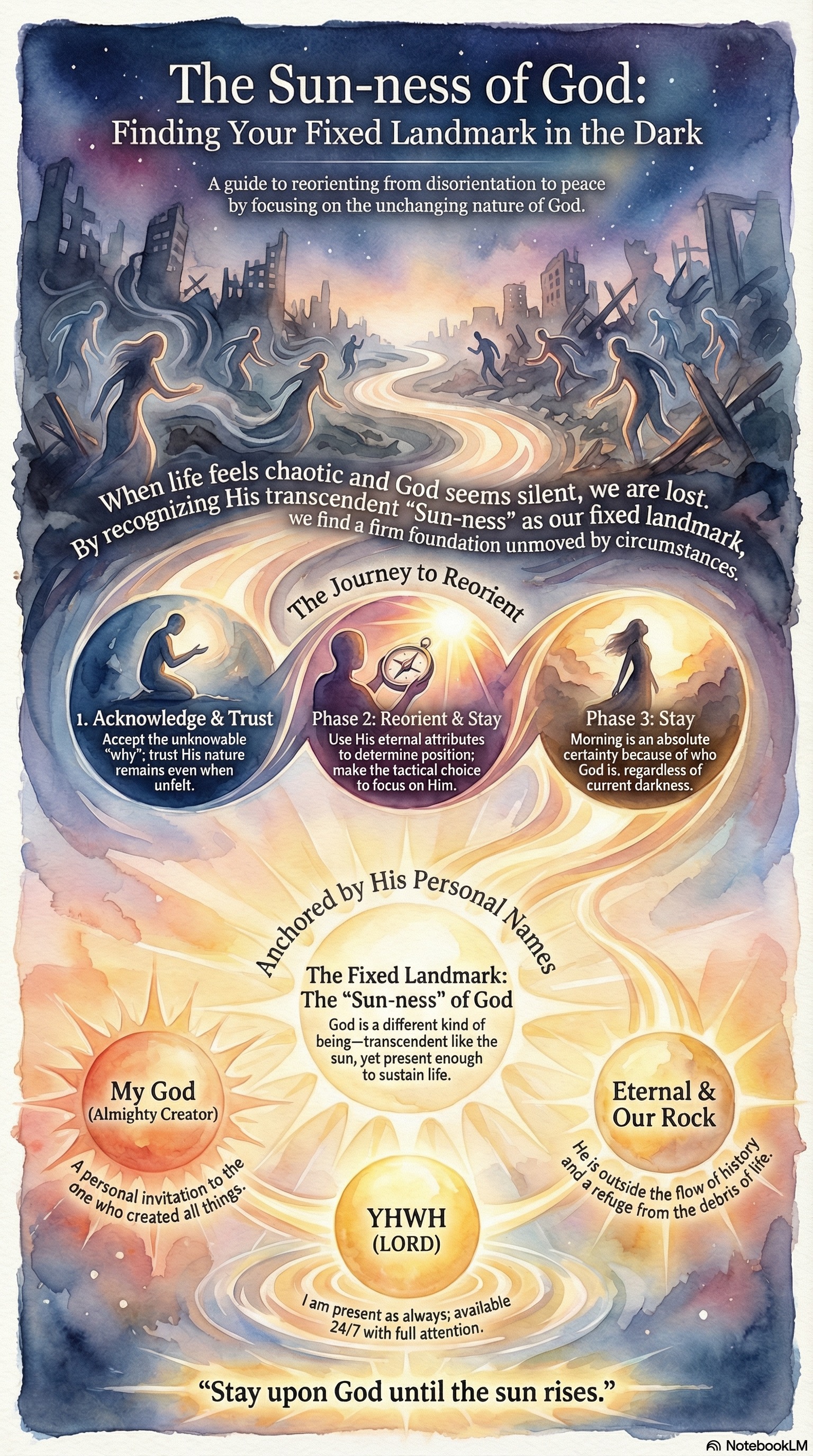
The “Sun-ness” of God: Holy means Distinct

To reorient, we must understand God as our landmark, specifically His holiness. Think of the difference between a drawing of the sun and the actual sun. You can look at a sketch, touch the paper, and understand its shape. But you cannot “touch” the sun; its heat, power, and brilliance would vaporise you long before you made contact.

Holiness is God’s “sun-ness.” He is not just a better version of us; He is a different kind of being entirely. However, this “otherness” does not mean He is inaccessible. Like the sun, God is too great to be controlled, but He is also too present to be ignored. The sun is 93 million miles away, yet its “sun-ness” is exactly what allows it to reach across the vacuum of space to sustain life. His transcendence (being above us) is precisely what makes His immanence (being with us) possible.

When you are lost  you must find a landmark that is fixed. Because God is “Holy”—the “Sun-ness” outside of our creation—He is the only truly fixed point. When Habakkuk stood on his watchtower, he didn’t look at the Babylonian army to find his peace; he looked at the “Sun-ness” of God.

To use this landmark:

  • Acknowledge: Accept that you cannot understand the “why” of every event. God begins where our data collection ends.
  • Trust: Even when you can’t feel the heat, the “Sun-ness” of God remains.
  • Reorient: Use His attributes to determine your position. If God is eternal, this crisis is temporary.

Distinct not Distant – The Personal Name: YHWH

“O LORD,” says Habakkuk. That is the personal name that God revealed to Moses when he tried to dodge going to tell Pharaoh, an absolute despot with no accountability, to let  “my people go.”  LORD (YHWH) describes His activity: “I am present as always,” available 24/7 with full attention. Unlike a human gatekeeper who might deny access, God’s attention is always full because His holiness tells us He is different.

Affirm these personal landmarks:

  • He is “LORD”. (YHWH) 
  • He is “MY God”: A personal pronoun; respond to the personal invitation.
  • He is”my GOD“: The Hebrew word means “Almighty Creator”.
  • He is “Eternal”: He is outside the ebb and flow of history.
  • He is “Our Rock”: A firm foundation – a refuge outside of the debris flow.

The Voice That Sustains the Weary

Isaiah 50 addresses the darkness from the perspective of the Servant—the voice that sustains the weary. This is not the rehearsed art of an orator; it is a voice that carries weight because the speaker is literally nailed to a cross in the darkness.

 During the unnatural night of the crucifixion, Jesus cries out in anguish: “My God, my God, why have you forsaken me?”  Yet, after that cry of abandonment eventually comes the calm, trusting voice of faith: “Into Your hands I commend my spirit.”

Jesus acts as the bridge between the “Sun-ness” of God and our human frailty. Just as the atmosphere allows us to experience the sun’s light without being consumed by its raw heat, He is the “radiance of God’s glory”—the brilliance of the sun brought down to eye level. He absorbed the darkness so that we might walk in the light.

When you find yourself in the “pitch-black room” of a personal crisis, the natural instinct is to scramble for a flashlight—to fix the problem, find an answer, or force a resolution. But Isaiah offers a different strategy for the pilgrim: Stay.

Staying Upon YHWH – Leaning against a Rock

Staying is not a sign of defeat; it is a tactical choice of focus. It is the refusal to let the chaos of the immediate “alarmed thoughts” drown out the reality of the fixed landmarks. By orienting yourself toward the “Sun-ness” of God, you recognize that while you are currently in the shadow, the Sun itself has not moved, dimmed, or changed.

You are leaning against a Rock that is higher than the debris flow. You are listening to a Voice that has already navigated the deepest darkness and emerged with a calm, commendatory faith.

If you are walking in darkness, stay upon God until the sun rises. For the pilgrim, the morning is not just a possibility; because of who God is, it is an absolute certainty, the one and only sure thing in a changing world.

The Babylonians still invade. Jerusalem was sacked. Captivity lasted seventy years.

But Habakkuk, as we shall see, was not sighing anymore, after seeing, he began singing. 

Stay tuned!

Choose Contentment Over Un-Happy-Mess

5 Feb

I find that I have no control over my feelings – I have no idea where they come from, am bewildered by their intensity and dismayed by the turmoil they can promote. Like prowling predators, say a grizzly bear in my attic, emerging to ambush me when I least expect it.

Choice

What I have learned though, is that I can choose what to do with them.

I can focus on them, nurture them and wallow in them. That makes them determinative of my mood, and that in turn controls my reactions to life in general spilling over into behavior. They are in control, they are the landscape in which I live, I am trapped as a victim.

Or I can choose to take control. I do this by examining them and deciding if they are valid. By that I mean, if they are a reflection of unrealistic expectations, harsh self-judgement, embarrassment, shame, or  …   ?They invite me to remain mired in them, trapped by them, controlled by them, but I can evaluate them and decide that they belong in the rearview mirror, not filling the windshield of my life. By weighing them up I can decide they are not worth entertaining.

Acceptance

By acknowledging them, examining them and recognizing them I find I am able to sigh deeply, and then view them as helpful because they have given me insight and I can take what I learned about myself and then walk into the future with a new confidence and maturity. Happiness is in this sense a choice. I cannot control how and when the emotions arise, but I can choose to change my point of view about them. Then something significant occurs –  that elusive thing called happiness is no longer all consuming. (Generally happiness is realized in retrospect, I experience it when I reflect afterwards on a happy event or interaction.) 

A Human Becoming – not a Human Being

The remarkable thing is that I then experience contentment. Contented with who I am, joyful that I am a human becoming who learns from the past; expects more misery in future learning experiences, but know it is part of the rounding out of my personality. Also, it enables me to be sensitive to the moods of those around me. Contentment is a learned state of joyful acceptance, happiness is a yo-yo of conflicting misery. Contentment promotes wholeness, replacing woundedness.

Perspective is essential to every problem: it resituates us and reveals the way ahead,

Instead

How do I escape the quicksand of all encompassing sorrow or anxiety or sadness? A train heading to a washed out bridge needs the switch thrown that will change its track to a safe siding called Contentment. “Stop it!” as a command adds to the stress because like an endless looping video it will not cease. Paul writes in Philippians 4 “Do not worry about anything.” As a blunt command it is cruel, because I then add the worry that I cannot stop worrying to the worry intensifying its terror. He finishes the thought, “Instead .. by prayer, with thanksgiving, make your request known.” Do something else instead. “Instead” is the switch that changes the track of the train.

Prayer with Thanksgiving

Prayer captures the practice that focuses on the worship God. So, I immediately set the problem to one side and engage fully in contemplating God.

He is our Creator: “Try to realize what this means—the Lord is God! He made us—we are his people, the sheep of his pasture. Go through his open gates with great thanksgiving; enter his courts with praise. Give thanks to him and bless his name.  For the Lord is always good. He is always loving and kind, and his faithfulness goes on and on to each succeeding generation.” (ps 100:3-5)

He is our Savior: “…. as I worship, giving thanks to you for all your loving-kindness and your faithfulness, for your promises are backed by all the honor of your name. When I pray, you answer me and encourage me by giving me the strength I need.” Psalm 138:3

He is a Redeemer: “For you know what was paid to set you free from the worthless manner of life …. It was not something that can be destroyed, such as silver or gold;  it was the costly sacrifice of Christ, who was like a lamb without defect or flaw.” 1 Peter 1:18-19. ” “But the LORD says, Do not cling to events of the past

  or dwell on what happened long ago.
19 Watch for the new thing I am going to do.

 It is happening already—you can see it now!
I will make a road through the wilderness
    and give you streams of water there.” Isaiah 43:18-19

He is our Companion. In Psalm 23 replace the personal pronouns with my name. “The Lord is Anton’s shepherd. Anton shall not want.” And so on. Be astonished by this! “He prepares a banquet for Anton,
    He welcomes Anton as an honored guest
    and fills Anton’s cup to the brim.”

Let the astonished delight be expressed in thanks giving.

Request, not Demand

Now make a request, not a demand. Only now, and not before prayer and thanksgiving, do I make a request. It is a request, not a panic stricken screaming demand. And in the light of the prayer, my request may be more like desire for a closer walk with the Shepherd rather than an outright deliverance from the situation; a yearning to let the peace that floods my being with contentment be mirrored in the situation as a testimony to His Living Presence, or asking for wisdom in the fulness of the Holy Spirit. So it it becomes a dynamic process that is like the heavy flywheel of an engine, it keeps momentum going even when the engine is idling.

Practice Makes Contentment

Paul says, and I affirm, it is a state of consciousness that is learned through practice. Just as a skill is obtained through an apprenticeship, so must we practice this dynamic of “Instead”. Every time some emotion disturbs you, determine that you will immediately set the circumstance aside, contemplate God with thanksgiving, and request His Shepherding. Ultimately it will become your reflex action, but only if you take the first faltering steps and make progress through continued practice.

Peace That Transcends Understanding

10 Nov

Sometimes our need is so pressing that we rush to demand our requests. We experience such anxiety as the aquatic pressure that water exerts on our submarine, and we feel set to implode. Panic motivates us, helplessness paralyzes us, we hit the emergency call button repeatedly. 
Paul, writing from a Roman prison where his future meant probable death, writes, “Do not be anxious about anything, but in every situation, by prayer and petition, with thanksgiving, present your requests to God. And the peace of God, which transcends all understanding, will guard your hearts and your minds in Christ Jesus.”
His statement is not made from a secure palace by a cozy fire surrounded by a moat and an army.  He is in the trenches.
He exercised his choice to resituate himself. He saw himself, not languishing in prison, but luxuriating in a palace.

https://docs.google.com/document/d/e/2PACX-1vQw0pWKsnAFhIF1gZjlMpv6lwg_5FKxKCq7BUAefsX4wfrWH1kuKWePQ6PI_-lx0Ji9d-rkGpqhSC8S/pub?embedded=true

Avoiding Worry in Chaotic Times

3 Apr

War, terrorism, refugees, famine, climate change, political polarity, shootings, road rage, dictators, (insert your own nightmares here) all tangled up in our consciousness like roots in mangrove swamp, \making our walk torturous and dangerous.

Inside of me is a resigned paralysis. I am bewildered, not just by the outward circumstances, but by the murmuring of my anxious heart that seems arrhythmic right now, and worse, by the strong, even violent, unChristlike thoughts and emotions that overwhelm me at times.

I responded: “No. But a great idea! I will start thinking about it. I think it’s a process of resting in God every time the anxiety registers at a conscious level. I mean deliberately and then persisting. You got any ideas? Some scriptures spring to mind: Phil 4 (be anxious for nothing); 1 Peter (casting all your care on Him); Can you by thought add a cubit to your stature – consider the lilies (Jesus in Sermon on Mount). Maybe something on how to love them that hate you as well as those who distress you. How to turn worry into relaxed concern? “

Inside of me is a resigned paralysis. I am bewildered, not just by the outward circumstances, but by the murmuring of my anxious heart that seems arrhythmic right now, and worse, by the strong, even violent, unChristlike thoughts and emotions that overwhelm me at timesJoan Kruger wrote:  “So Anton, have you thought about doing a series on how to let go of one’s rising anxiety level during this election?  Would help a whole lot of people!” 

Joan: “You made me laugh. What really got me going was the Habakkuk study. Totally paraphrasing. God why aren’t you doing anything with these evil people. God, I’m using them to bring you back to me.  And guess what, you ain’t seen anything yet. My point is more that God is using the world’s turmoil for our good and to advance His kingdom but turmoil, even for our good, can be painful.””

So with Joan as a collaborator, here we go.

A Map of the Journey

Entering a wilderness without a map is lunacy. It is dangerous lunacy, survival is at stake.

It is my prayer that these articles will provide a map so that we can gain insight and grow. I do not think we will ever fully understand, always seeing through glass, coated with sticky smoke from the wildfires, until we see Him Face to face in glory, but distress is dealt with in numerous ways that will hopefully provide secure stepping stones through the quicksands.

Let’s keep our concentration on these scriptural stones.

Habakkuk says he rushed to the Temple to await God’s response, and Asaph the Psalmist  was deeply distressed by the prosperity of the wicked until … he entered the temple:

Surely God is good to Israel,
    to those who are pure in heart.

But as for me, (not sure pure of heart) my feet had almost slipped;
    I had nearly lost my foothold.
For I envied the arrogant
    when I saw the prosperity of the wicked.

They have no struggles;
    their bodies are healthy and strong. 

They are free from common human burdens;
    they are not plagued by human ills. 

Surely in vain I have kept my heart pure
    and have washed my hands in innocence.

All day long I have been afflicted,
    and every morning brings new punishments.

When I tried to understand all this,
    it troubled me deeply…

… UNTIL

Until …  I entered the sanctuary of God (Psalm 73 NIV)

Always, The First Response, Always

Set the problem to one side, and go straight into the Presence of God. He will enable you “to be still, and know that I am God” (Psalm 46:10). This is so important, because it immediately changes the context, putting the issue into the background and God in the forefront. Now the problem is no longer free to float in the frame of your life with its limitations, but is placed in the orbit of God’s infinite care. You can heave a sigh of relief and let go while you figure out the next step with your Heavenly Guide navigating  the map of God’s Word.

HINDS FEET ON HIGH PLACES

Earlier Habakkuk said:

 “ … will climb up to my watchtower

    and stand at my guardpost.

There I will wait to see what the Lord says

    and how he[a] will answer my complaint.” (Hab 2:1 NLT)

concludes in a similar way:

YET 

Yet I will rejoice in the Lord!

    I will be joyful in the God of my salvation!

The Sovereign Lord is my strength!

    He makes me as surefooted as a deer, 

    able to tread upon the heights. (Hab 3:18 NLT)

Life is not lived from an armchair, it is a journey, sometimes in a jolting stagecoach through rough terrain with masked bandits committing life threatening hold ups. 

A map with an experienced guide is getting the best of two worlds. 

May these meditations be like oasis’ on the map, and may the Holy Spirit be your guide.