The Illusion of Control

25 Jun

Last night our dishwasher sprang a leak and the kitchen floor was filmed with water. I attempted to shut the water supply off under the sink, but the valve had calcified and it was immoveable. I attempted to control the situation by spraying it with WD 40. I thought it was loosening and applied more pressure with a spanner. The shaft of the valve sheared right off and water started spraying under the sink. I dashed for the main water supply and shut it off. But it too has calcified and all my efforts reduced the water to a trickle that I cannot remedy. Many times events have spiralled out of my control. Sometimes the outcome was pleasant, and at other times beyond belief catastrophic.  

In an idle moment, renowned National Geographic photographer Pete McBride, lounging on a couch,  suggested to journalist Kevin Fedarko that they do a thru-hike of the Grand Canyon. “It will be a walk in the park” he maintained. Thru-hiking the Grand Canyon is daunting even  to veteran hikers and requires intensive planning and massive support with food caches at strategic points. It is not for the faint hearted. Fortunately the thru-hiking community saw through their amateur status and stepped up in support. Even so, Fedarko came to this conclusion, that is applicable to all of life:

“Sooner or later, every difficult journey collides against a moment that crystallizes the imperative of accepting that the outcome of any ambitious undertaking can neither be ordained nor engineered by its participants, and that the heart of an odyssey is reached-and its deeper truths begin to reveal themselves—only after the illusion of control is permitted to fall away and disappear into the gathering night, like a loose pebble over a cliff.”

Kevin Fedarko. “A Walk in the Park”.

Searching for God is an unimaginably daunting and ambitious undertaking. God says of Himself, “I am the high and holy One who Inhabits eternity.” “Holy” in the Bible means other-than, God is “different” to mortal flesh and blood. That is, he is outside of space and time. Where all our scientific data end, that is where He dwells. To know Him requires handing Him control, or, to state the obvious, trusting Him. Some are content with a shallow self indulgent search and abandon the journey at the first obstacles.  

Read the sentence again.

“. . .  the imperative of accepting that the outcome of any ambitious undertaking can neither be ordained nor engineered by its participants, and that the heart of an odyssey is reached-and its deeper truths begin to reveal themselves.” 

Job discovered this – he lost everything, property, livestock, family, and finally his health. He searches for God to hold Him accountable for all this suffering. And finally God shows up and reveals His Highness and His Holiness: This new perspective brings Job to confess, “I had heard of you, but now my eyes have seen you.” The ocean depths have been little explored because of the difficulties involved. God has depths that no mortal can fathom, no equipment is available and His purposes go beyond our understanding.

What shall we do?

1 Peter 5:6-7: “Humble yourselves, therefore, under the mighty hand of God so that at the proper time he may exalt you, casting all your anxieties on him, because he cares for you.”. 

“The proper time” is not something we like to hear. Yet to reach the deeper truths, we must give up control, “casting all our care on Him.” 

Soldiers who suffered together have a special bond that only they understand and share between themselves. God suffers too and draws into just such a special bond. Every tear that humans have shed formed  in God’s eye first. Suffering takes us to a special place in God’s suffering heart.

“Proper time” has another dimension – the other dimension involves your exaltation. Trust changes the perspective of suffering from self-pity to contentment. 

The other dimension is an exalted view of God, and exalted experience of God, an exalted place in eternity with God.


MAKING SPACE IN A GRIEVING HEART

11 Jun

“I can’t breathe!” I gasped to friends at the funeral of my grandson Geoffrey. The pressure in my chest felt unbearable. That constriction of the heart pressing on the diaphragm is true of all grieving. 

Ioana Hociota, was married to Andrew Holycross. They were doing the challenging Grand Canyon thru-hike, a traverse from North to South through remote unmarked back country, when she slipped on a patch of ice and fell to her death. Kevin Fedarko makes an observation that is an essential aspect of grieving – – eventually a space will open up in the constricted  heart.

“In the days immediately following Hociota’s death, he (Holycross) had formed an intense hatred toward the canyon for having taken her from him—a feeling that festered for weeks, until eventually, despite his best efforts, its grip slowly began to loosen. Eventually, with the passage of time, somewhere inside his heart a space opened in which he was able to revisit the memories of the times they had spent and the things they had done together in the world beneath the rims. And as his love for the landscape returned to him, with it came the possibility that he might consider allowing himself to return to the land.” (Kevin Fedarko. “A Walk in the Park”)

Some advised me, “Time will bring healing.” I thought to myself, “I do not want to be healed. I want to remember him, I want to honor him. I need to feel raw.” Job’s friends did the right thing: “11 When three of Job’s friends heard of the tragedy he had suffered, they got together and traveled from their homes to comfort and console him. . . . 13 Then they sat on the ground with him for seven days and nights. No one said a word to Job, for they saw that his suffering was too great for words.” (Job 2) 

I rushed to the hospital the instant I heard a good friend’s 6 year old died. His best friend arrived soon after and asked me before entering the room, “What do I say?” I replied, “He will not remember what you said. He will remember you came. Just hug him.”

“Today was a Difficult Day,” said Pooh.

There was a pause.

“Do you want to talk about it?” asked Piglet.

“No,” said Pooh after a bit. “No, I don’t think I do.”

“That’s okay,” said Piglet, and he came and sat beside his friend.

“What are you doing?” asked Pooh.

“Nothing, really,” said Piglet. “Only, I know what Difficult Days are like. I quite often don’t feel like talking about it on my Difficult Days either.

“But goodness,” continued Piglet, “Difficult Days are so much easier when you know you’ve got someone there for you. And I’ll always be here for you,

How did God react?

Isaiah 41:10: “So do not fear, for I am with you; do not be dismayed, for I am your God. I will strengthen you and help you; I will uphold you with my righteous right hand.”

I rushed to the hospital the instant I heard a congregant’s 6 year old died. His best friend arrived soon after and asked me before entering the room, “What do I say?” I replied, “He will not remember what you said. He will remember you came. Just hug him.”

God’s Reassurance

 I have called you by name; you are mine.
When you go through deep waters,
    I will be with you.
When you go through rivers of difficulty,
    you will not drown. Isaiah 43)

Take heart, grieving friends, space will open up, life will resume, and the raw wound will develop a beautiful scar as a constant and visible reminder of a deeply loved one; anguish will soften as joyful memories begin to replace bewilderment.

An earthquake changed the landscape, it will never be the same, but there will be a different beauty will emerge from the ravished land. 

Going to Church is Wrong

25 Feb

While shaving this morning, I was anticipating with great joy the prospect of going to church. I like to prepare myself so that I get the full benefit.

The thought came to me forcibly, “STOP USING THAT PHRASE!” 

In biblical context, you cannot “go to church.” The Greek word that the bible uses  for church is “kuriakes.” It appears twice in the New Testament. It literally means “of the Lord”, describing people as “belonging to the Lord.” (See Gemini answer in ENDNOTE) You can trace the English word back to the Greek word: the krk in “K u r ia k es” became “kirche” in German, was abbreviated to “kerk” in Dutch, Scotland added brogue and it became “kirk”, and since England is slightly (considerably?) an island unto itself, it is “church” in English – the hard k starting and ending the word in the other languages was changed and softened to ch, as it chat, in English.

When Jesus spoke of what is now called “church”, he used a different Greek word “ekklesia”. Its secular use was political, “to call out citizens to a public meeting”. The antecedent to it is found in the Old Testament. The Hebrew word “qahal” describes people gathering for public meetings, including legal proceedings, military call up, and worship.

So how did the switch happen? It was illegal to translate the bible into English, and early translators were in peril. Wycliffe translated the Latin Vulgate into English, and hand copied versions circulated. He escaped execution, but was declared a heretic after he died, and his body was exhumed and burned at the stake. (really!)

Tyndale translated the original Hebrew and Greek texts into English, working from Belgium to escape persecution. He was captured, however, and executed by strangling and then his body was burnt at the stake as a heretic in Vilvoorde, Belgium. There is a park, impressive memorial and museum there now. (Picture generated by Gemini AI)

Why such opposition? To distill a complex issue to one implication; both the Roman Church and Kings (who were Roman Catholics) feared any challenge to their absolute power and authority. Church and state were so intertwined that those who did not baptize their infants were considered treasonous. Heresy and treason were somewhat of a synonym. Any gathering of believers not sanctioned by “The Church” could well lead to unintended consequences.

However, when it became apparent in England that due to popular demand a translation was inevitable, King James authorized a translation so that he could control it. Some 47 scholars appointed by King James, worked under the constraint of 15 rules set by the King. One rule was that the word ekklesia, translated by Tyndale as “congregation” (and In some cases as “assembly”), must be translated as “church”. This choice was deliberate – a new meaning was threatening to the institution of church and state. Church was an entity with the King (or the Pope) in charge, a congregation was a loose cannon on the ship of state. Since it became the only standard translation, it enshrined “church” as a politically controlled entity, the very thing Jesus refused. He refused to acknowledge either the Sanhedrin or Caesar and this was the human cause of His public execution. 

Ekklesia is a composite noun made up of the preposition “ek”, meaning “out of”, and the verb “kaleo”, “to call”. So the ekklesia is the mustering of those who have been called to gather to worship. 

What should I anticipate and what will the eyes of my understanding grasp as I gather? Hear these magnificent words! “… you have come to Mount Zion, to the city of the living God, the heavenly Jerusalem, and to countless thousands of angels in a joyful gathering. You have come to the assembly of God’s firstborn children, whose names are written in heaven. You have come to God himself, who is the judge over all things. You have come to the spirits of the righteous ones in heaven who have now been made perfect.” (Hebrews 12:22-23 NLT)

Going to church? Nah! Could be, has been, very boring. I sit as a critic, evaluating people, performances and practices, all have self at the center. Worship has God at the center.

Fanny Crosby went blind at an early age. Her secretary, knowing she was alone in her office, once heard her talking, and crept up to hear if help was needed. She heard the hymn writer exclaiming in prayer, “O Lord! If only those poor sighted people could see what I see now!” The experience was captured in the great hymn, “Blessed assurance, Jesus is mine, O what a foretaste of heaven divine . . . Perfect submission, perfect delight, Visions of rapture now burst on my sight; Angels descending bring from above, Echoes of mercy, whispers of  love.”

Reflecting on the gathering: the choir sang a piece beyond their capabilities, I was in a “dead space” in the auditorium and missed some things, the liturgy was wordy and rushed but magnificent, the sermon was outstanding and short, I sat – inadvertently – where families with small children were constantly and delightfully on the bustle. I am only aware of it retrospect, my spirit was soaring, glued in worship and wonder to the Lord of Glory.

Open the eyes of your heart. 

Go to Worship! 

ENDNOTE:

The Greek word “kuriakos” (κυριακός) appears twice in the New Testament:

  • 1 Corinthians 11:20:
    • Here, it’s used in the phrase “kuriakon deipnon” (κυριακὸν δεῖπνον), which translates to “Lord’s supper.”
  • Revelation 1:10:
    • In this verse, it’s found in the phrase “kuriake hemera” (κυριακῇ ἡμέρᾳ), meaning “Lord’s day.”

Essentially, “kuriakos” signifies something “belonging to the Lord.” So, in these instances, it specifies that the supper and the day are associated with or belong to the Lord (Jesus Christ).

Choose Contentment Over Un-Happy-Mess

5 Feb

I find that I have no control over my feelings – I have no idea where they come from, am bewildered by their intensity and dismayed by the turmoil they can promote. Like prowling predators, say a grizzly bear in my attic, emerging to ambush me when I least expect it.

Choice

What I have learned though, is that I can choose what to do with them.

I can focus on them, nurture them and wallow in them. That makes them determinative of my mood, and that in turn controls my reactions to life in general spilling over into behavior. They are in control, they are the landscape in which I live, I am trapped as a victim.

Or I can choose to take control. I do this by examining them and deciding if they are valid. By that I mean, if they are a reflection of unrealistic expectations, harsh self-judgement, embarrassment, shame, or  …   ?They invite me to remain mired in them, trapped by them, controlled by them, but I can evaluate them and decide that they belong in the rearview mirror, not filling the windshield of my life. By weighing them up I can decide they are not worth entertaining.

Acceptance

By acknowledging them, examining them and recognizing them I find I am able to sigh deeply, and then view them as helpful because they have given me insight and I can take what I learned about myself and then walk into the future with a new confidence and maturity. Happiness is in this sense a choice. I cannot control how and when the emotions arise, but I can choose to change my point of view about them. Then something significant occurs –  that elusive thing called happiness is no longer all consuming. (Generally happiness is realized in retrospect, I experience it when I reflect afterwards on a happy event or interaction.) 

A Human Becoming – not a Human Being

The remarkable thing is that I then experience contentment. Contented with who I am, joyful that I am a human becoming who learns from the past; expects more misery in future learning experiences, but know it is part of the rounding out of my personality. Also, it enables me to be sensitive to the moods of those around me. Contentment is a learned state of joyful acceptance, happiness is a yo-yo of conflicting misery. Contentment promotes wholeness, replacing woundedness.

Perspective is essential to every problem: it resituates us and reveals the way ahead,

Instead

How do I escape the quicksand of all encompassing sorrow or anxiety or sadness? A train heading to a washed out bridge needs the switch thrown that will change its track to a safe siding called Contentment. “Stop it!” as a command adds to the stress because like an endless looping video it will not cease. Paul writes in Philippians 4 “Do not worry about anything.” As a blunt command it is cruel, because I then add the worry that I cannot stop worrying to the worry intensifying its terror. He finishes the thought, “Instead .. by prayer, with thanksgiving, make your request known.” Do something else instead. “Instead” is the switch that changes the track of the train.

Prayer with Thanksgiving

Prayer captures the practice that focuses on the worship God. So, I immediately set the problem to one side and engage fully in contemplating God.

He is our Creator: “Try to realize what this means—the Lord is God! He made us—we are his people, the sheep of his pasture. Go through his open gates with great thanksgiving; enter his courts with praise. Give thanks to him and bless his name.  For the Lord is always good. He is always loving and kind, and his faithfulness goes on and on to each succeeding generation.” (ps 100:3-5)

He is our Savior: “…. as I worship, giving thanks to you for all your loving-kindness and your faithfulness, for your promises are backed by all the honor of your name. When I pray, you answer me and encourage me by giving me the strength I need.” Psalm 138:3

He is a Redeemer: “For you know what was paid to set you free from the worthless manner of life …. It was not something that can be destroyed, such as silver or gold;  it was the costly sacrifice of Christ, who was like a lamb without defect or flaw.” 1 Peter 1:18-19. ” “But the LORD says, Do not cling to events of the past

  or dwell on what happened long ago.
19 Watch for the new thing I am going to do.

 It is happening already—you can see it now!
I will make a road through the wilderness
    and give you streams of water there.” Isaiah 43:18-19

He is our Companion. In Psalm 23 replace the personal pronouns with my name. “The Lord is Anton’s shepherd. Anton shall not want.” And so on. Be astonished by this! “He prepares a banquet for Anton,
    He welcomes Anton as an honored guest
    and fills Anton’s cup to the brim.”

Let the astonished delight be expressed in thanks giving.

Request, not Demand

Now make a request, not a demand. Only now, and not before prayer and thanksgiving, do I make a request. It is a request, not a panic stricken screaming demand. And in the light of the prayer, my request may be more like desire for a closer walk with the Shepherd rather than an outright deliverance from the situation; a yearning to let the peace that floods my being with contentment be mirrored in the situation as a testimony to His Living Presence, or asking for wisdom in the fulness of the Holy Spirit. So it it becomes a dynamic process that is like the heavy flywheel of an engine, it keeps momentum going even when the engine is idling.

Practice Makes Contentment

Paul says, and I affirm, it is a state of consciousness that is learned through practice. Just as a skill is obtained through an apprenticeship, so must we practice this dynamic of “Instead”. Every time some emotion disturbs you, determine that you will immediately set the circumstance aside, contemplate God with thanksgiving, and request His Shepherding. Ultimately it will become your reflex action, but only if you take the first faltering steps and make progress through continued practice.

GENDER STRIFE

29 Nov

Current thinking stems from Genesis 3. In Genesis 3 humankind goes into the god-business for themselves and so a power struggle between the sexes begins. A pecking order came into play – “Who’s the Boss” became the main issue between men and women.

God’s intention, however, is in Genesis 1, where humanity is created to reflect the harmony that exists in the Trinity. Practical implications follow; some puzzling passages in the bible become clear.

https://www.westbowpress.com/en/bookstore/bookdetails/862031-harmony

Crisis Has A Benefit

21 Nov

At the center of every crisis 
is an inner space 
so deep, so beckoning, 
so suddenly and daringly vast, 
that it feels like a universe, 
feels like God. 

When the unthinkable happens, 
and does not relent, 
we fall through our hubris 
toward an inner flow, 
an abiding and rebirthing darkness 
that feels like home. 
   —Barbara Holmes, “What Is Crisis Contemplation?” 

Peace That Transcends Understanding

10 Nov

Sometimes our need is so pressing that we rush to demand our requests. We experience such anxiety as the aquatic pressure that water exerts on our submarine, and we feel set to implode. Panic motivates us, helplessness paralyzes us, we hit the emergency call button repeatedly. 
Paul, writing from a Roman prison where his future meant probable death, writes, “Do not be anxious about anything, but in every situation, by prayer and petition, with thanksgiving, present your requests to God. And the peace of God, which transcends all understanding, will guard your hearts and your minds in Christ Jesus.”
His statement is not made from a secure palace by a cozy fire surrounded by a moat and an army.  He is in the trenches.
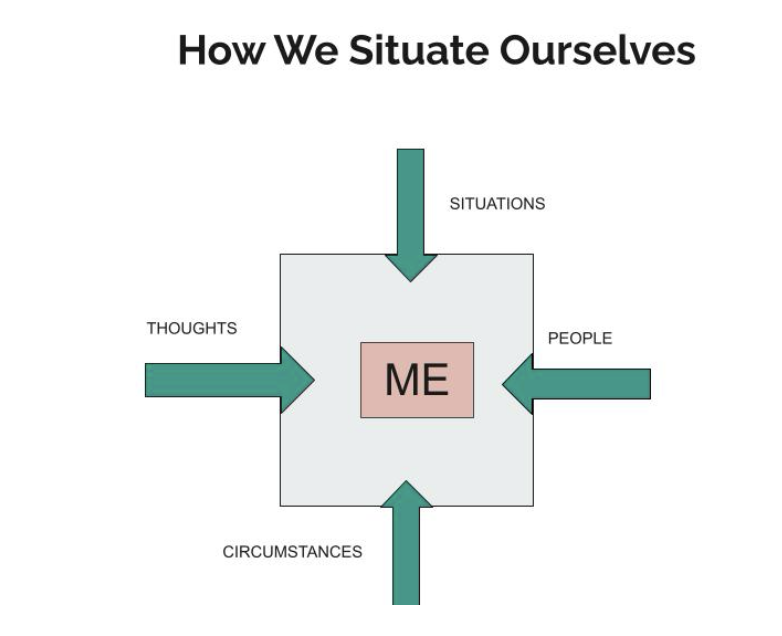
He exercised his choice to resituate himself. He saw himself, not languishing in prison, but luxuriating in a palace.

https://docs.google.com/document/d/e/2PACX-1vQw0pWKsnAFhIF1gZjlMpv6lwg_5FKxKCq7BUAefsX4wfrWH1kuKWePQ6PI_-lx0Ji9d-rkGpqhSC8S/pub?embedded=true

Who’s Calling?

21 Oct

Roaming in Romans

The promise is “peace that transcends  understanding.”

That alone should set the alarm bells ringing loudly.

And what must I invest for this priceless gift?

Nothing! Nothing?

What’s the catch?

Conclusion: An imposter is scamming me!

My inner voice is screaming: “Check the credentials!”

Paul’s Credentials 

I, Paul, am a devoted slave of Jesus Christ on assignment, authorized as an apostle to proclaim God’s words and acts. (Romans 1:1 The Message)

He is a slave 

Four things are pertinent concerning a slave:

  • Absolute obedience constrains him. 

Slaves do not punch time clocks or have off hours. They cannot resign or choose their assignments. They cannot argue about their assignments. Paul’s words were spoken in obedience and not concocted in the laboratory of his own mind. (Galatians 1:11-2:10)

  • A great love binds him. 

In the Hebrew scheme, slaves were to be released after 7 years. Slaves could elect to remain in the ownership of their masters when the time came for their release. This indicated they were happy in the household, they loved their master. A slave who elected this option would have his ear pierced by pinning it to the door post with an awl. This was a sign that symbolized his ear was open to hear his master and he was fixed to the household. Paul opted to remain in the service of the greatest King for the rest of his life.

  • A great office honored him.  

He is not just any slave – he is a slave of Jesus Christ. Far from being embarrassed, there is immense pride by the addition of the words “of Jesus Christ”. Slaves no doubt boasted of the great houses they served in. “You belong to who? I belong to Caesar!” While the world may pity his slavery, he is honored to serve such a great King.

  • A humble attitude envelops him. 

He always defers to the King. He does not put on airs or seek to promote self. He dies daily with great cheerfulness. This relationship alone brings significance to life and all else is relatively trivial. He lives humbly and happily as a slave of Jesus Christ.

He is called to be an apostle – A Plenipotentiary

A slave is the lowest denominator in society. Slaves do not generally generate a lot of excitement. As menials they can be ignored as safely as little sisters. An Apostle, on the other hand, is a specially chosen and authorized envoy, of the same order as an ambassador. These officers are known as “plenipotentiaries”. They are empowered (potent) in all areas (pleni). His call to the office is exceptional. Intently bent on stamping out Christ and his followers, God interrupted his agenda in a most dramatic way. (Acts 9:1-18) His message was imparted to him directly. (Gal 2:12) 

He is set apart for the gospel

Paul is of the order of a Test Pilot, a breed apart and set apart for a specific function. They are unique in their capabilities and have honed their skills through rigorous and arduous discipline. God called Paul from his mother’s womb, uniquely equipping him from conception, overseeing his development, so setting him apart for this exceptional calling.

His credentials are impeccable and are backed by the authority of God himself. 

They minimize the man, exalt the office and authenticate his message. We may fully expect to enjoy all the benefits of the spectacular promise. We will see that the message itself also has authenticating credentials, which will make a sure thing made more certain. 

Reflections

Slavery requires application in four areas of life. Assess yourself in each category, with 10 being perfect and 1 being pathetic. Ask someone close to you to honestly assess you in the same way. Confess your sin and then determine specific ways to bring about improvement. Ask your honest assessor to hold you accountable. Do this not as a duty, but as an exercise in demonstration of your love for God. In other words, be relaxed, concentrate on the friendship and enjoy his encouragement.

How should the idea of being Christ’s ambassador  (2 Corinthians 5:20) impact you today? 

You too have a calling. You too are uniquely conceived and your life has been an equipping for service. Let this astonishing fact elevate your life this day. “For You created my innermost parts; You wove me in my mother’s womb.” (Psalm 139:13)

Would you describe yourself as a person who knows this “peace that transcends understanding?” Recent data shows that unclaimed lottery winnings have averaged between $40 million and $50 million annually.

Unclaimed! 

Peace is like a winning lottery ticket. All you have to do is cash it in. How? Remember who God is, then pray: “Dear Lord, thank you for the gift of peace. You are in charge now.” Every time you feel disturbed, focus on God’s greatness and repeat the prayer. Initially it may mean praying it once every ten minutes! Gradually the truth will take hold and the peace will become pervasive.

Promised Peace: Scam Or For Real?

14 Oct

ROAMING IN ROMANS

Existential Angst

My three year old grandson was experiencing the acrimonious separation of his mother and father. His mother took him to visit some friends. He asked the host this staggering question: “Who do you belong to?” The host looked astonished and laughingly responded: “That is a very theological question.” The three year old was terribly earnest and followed up with another zinger: “Do you belong here?”

This three year old was caught up in the turmoil of family strife, he was disorientated and the pain of his restless heart came out in those two existential questions. At the tumultuous heart of every being lies the agony of those two questions: “Who do you belong to?” “Do you belong here?” When the gospel extends peace to us, it is setting our hearts at rest concerning those two fundamental existential issues. God is wrapping His arms around us to say: “You belong to me.” “You are at home in my Presence.” 

The Apostle Paul starts his letter to the Romans with this gigantic phrase:  “Grace and Peace to you.” Those two concepts address the existential questions troubling every heart.

Grace

Readers of Romans are not goaded to find peace, as if it were at the end of some obstacle course as a prize or reward for accomplishments. Peace is imparted as a gift. And that is the meaning of grace. Grace gives what we cannot earn. Our response to grace is often downright disbelief. We cannot fathom how we can possibly be given such a spectacular present. It is too good to be true. So we ask, correctly, “Is this a hoax?” 

“Mow the lawn,” says a younger sister. “Who says?” is the belligerent retort. Should I act on the information or can I simply ignore it? “Dad says!” brings an immediate obedience. “I say!” would bring a sneering jeer of contempt. 

“Grace and Peace to you.” “Who says?” 

The Apostle says, and he has provided ample evidence that he has been commissioned by God to be His direct spokesman, therefore God says. 

Peace

Distill every desire in your heart, and the residue will be peace. We crave it for our world, our neighborhood, our families and our hearts.

How will we achieve peace, this universally intense desire? 

Two solutions come to mind:

The first is daunting. 

Work for it. Organize and invest and strive and labor. Understand the system of rewards and punishments and work hard to enjoy peace as a reward. The trouble is that many things are beyond my control. Life requires co-operation and some that I need may be dancing to different music. Others are inept and keep treading on my toes. Circumstances often dictate nasty twists of destiny, and inner turmoil is generated by emotions that I cannot always control. Peace is an eel with a soaped skin. Just when I think I have a grip on it, it slithers out of my grasp.

The second is delightful. 

Peace is a gift. Peace is not at the mercy of emotions, other people or circumstances. It is not an onward search, promoted by self-effort. It is the result of a relationship with God, the gift of his friendship. Security and satisfaction are nowhere else to be found.  It cannot be engineered. So the promise of Christ is different to popular conceptions. “Peace I give unto you … not as the world gives,” he says. He promises it and also provides it. It is there for the taking. How do you accept a gift of friendship? With gratitude you accept the invitation to walk and talk together.

Notice once more how Paul phrases the concept. He does not exhort us to obtain peace. It is an impartation of grace and not an incitement. He can only do that because peace is the gift that grace bestows. Life with all its sin and strain is in constant interplay with grace that leads to peace. Without the stress and pain there could be no appreciation of the grace of peace. The greater the stress, the more we lean on him and the deeper our friendship becomes.

Reflections

In what areas of your life are you struggling with the enjoyment of peace?

How have you sought to find peace in the past? How successful have you been?

When offered a gift that is non-tangible, how do you go about accepting it?

Does the offer constitute the enjoyment of the gift, or is there some responsibility for the recipient to exercise?


THE GOD OF MERRIMENT

22 Jul

We recently attended Caversham Evangelical Church in the UK.  Pastor Bruce Jenkins gave an extraordinary exposition of Psalm 100.

One phrase was not explicitly addressed, “We are the people of his pasture.” I discussed it with him over lunch, and he reflected on a book by a genuine shepherd turned theologian, who commented that as a shepherd he kept watch over the pasture from a vantage point, with binoculars and a rifle. He saw and shot dangers of which the  sheep had no inkling! They grazed with contented security. I have let this occupy my mind, chewing the cud like a cow, meditating day and night:

1. Jesus has the binocs out, scouting for danger, ready to respond even when we are not aware of danger. (Like the chained lions in “Pilgrim’s Progress”; or Bach composing, “Sheep may safely graze ..”

2. But more, It is HIS pasture, so it provides the perfect toxic free, (organic is the mod word), grazing – pleasurable joyfulness and free abandon to the abundance in the meadow. Or, as the Hebrew may be rendered, the flock of his feeding, whom he takes care of and provides for. He that made us, maintains us, and gives us all things richly to enjoy.” (Barnes’ Notes)

3. And also, poetically, the sheep graze on Him! We feed on His word. Consider the lush grass of the pasture in Gill’s Exposition:  “… we are his people; by choice and covenant; by his Father’s gift, and his own purchase; and by the power of his grace, bringing to a voluntary surrender and subjection to him; even the Gentiles particularly, who were not his people, but now his people, 1 Peter 2:9”

The hymn by William Kethe, “All People that on earth do dwell… ” sets the Psalm to music. It has the line, “Him serve with mirth, His praise forthtell”. Pastor Jenkins underscored the element of joy throughout the Psalm, and then pointed out that the word “mirth” was changed somewhere in time, because “mirth” was considered too flippant. So many hymnals today have the line “Him serve with fear.” But the Psalm has this bright element of mirth about it! The word “mirth” comes from the Old English word “myrgth” or “myrth,” which means “joy, pleasure, or gladness.” “Psalm 100:1 consists of but a single clause, and is like the signal blast of a trumpet,” (Expositors’ Bible Commentary) like a herald opening a celebration. Jesus said, My burden is light, and talked about our joy being full. And what is more delightful than good company that cheers the heart, mirthful company! 

God hosts mirthful company!

What a wonderful thought! God hosts mirthful reunions! Pointing beyond the painful experiences of Job (38:7) is this mirth inducing phrase about the act of creation: “When the morning stars sang together, and all the sons of God shouted for joy.” verse 1 of Psalm 100 exhorts us, literally, “Make a joyful shout”. There is an air of jubilation in the phrase that carries throughout the Psalm.

The verb “Make” is an imperative. It is not a suggestion but a command that requires active participation. The noise is to be joyful. 

Celebrations are noisy. Consider how an audience reacts when their team takes the lead in a sports competition – the stadium erupts.

We enjoyed an evening in England with good, long-standing friends. The evening was anything but sedate! We laughed out loud with joyful memories in a free for all, rowdy reunion. It was mirthful. That is what Psalm 100 calls us to, with God Himself as the host.

There is marrow in the bone, you can access some more of it here:  

https://archive.spurgeon.org/treasury/ps100.php

Here is the hymn:  https://hymnary.org/text/all_people_that_on_earth_do_dwell