Archive | March, 2026

Ground Zero: The Day Your Past Was Leveled

18 Mar

Justification Made Simple

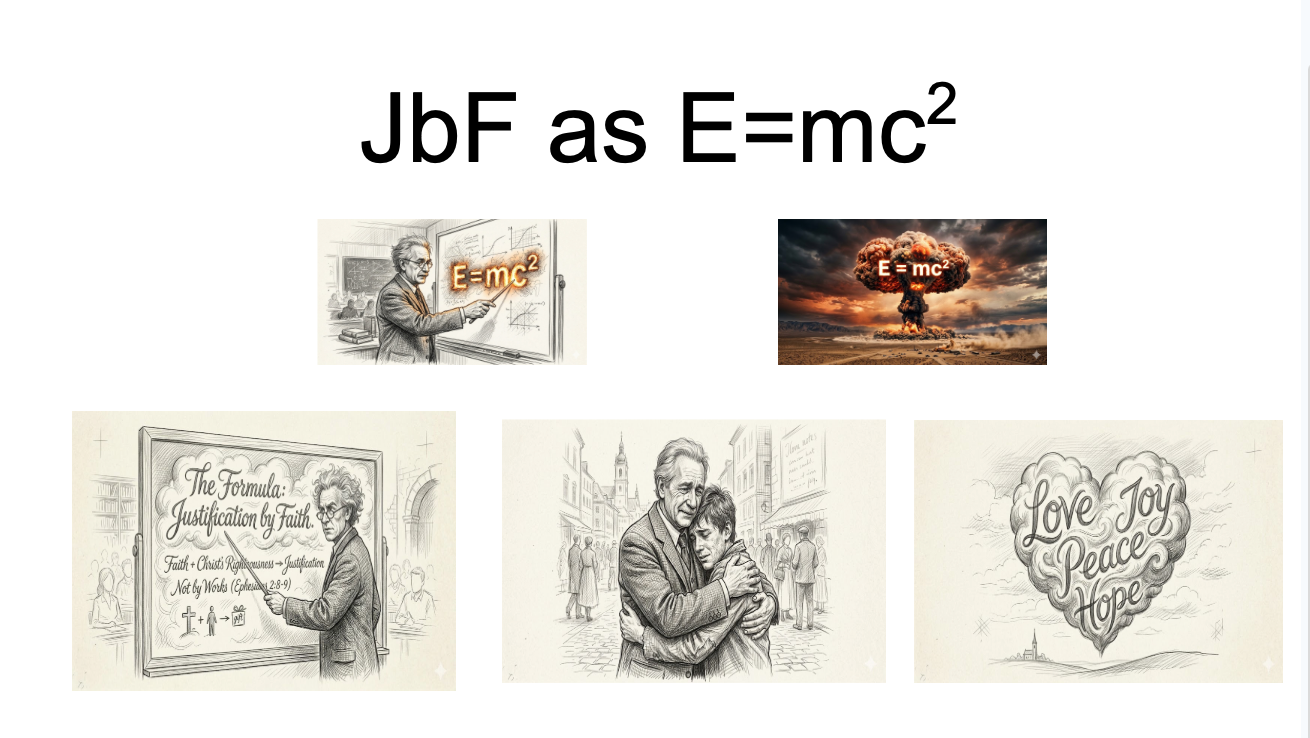
Justification by Faith can sound as abstract as E=mc². Applying it will change your life. Three familiar pictures give us insight: a courtroom, a debt, and acceptance.

The Courtroom

The evidence is undeniable and the verdict is clear: you are guilty. Justice requires the judge to pronounce the sentence. But before the sentence is carried out, someone else steps forward and offers to pay the penalty. Payment is followed by the announcement, “You are free to go”.

That declaration does not mean the wrong never happened. It means the penalty has been dealt with, and the judge now declares that justice has been satisfied. This is the picture used in the New Testament. Because of what Jesus did, God—the Ultimate Judge—clears your record and officially labels you “Right With Him”. The wall between you and God is gone, the distance is closed, and the relationship is fully restored

The Debt

Imagine owing a sum of money so large that you could never repay it. No matter how hard you worked or how long you tried, the obligation would remain. Then someone else steps in and pays the entire amount. The creditor stamps the record: “Paid in Full”.

Your circumstances change immediately. The debt is gone—not because you paid it, but because someone else did. Your record has been cleared. This is how the gospel describes the removal of guilt. The burden we could never discharge is settled through the work of Christ, and the record is changed.

Acceptance

Imagine living in a country as an illegal alien, living in the shadows with unrelenting fear. This is the spiritual reality of our existence. You may think that acceptance works like climbing a ladder. The thinking goes like this: improve your life, try harder, and become better until your status changes from alien to citizen. The common idea is that acceptance with God depends on our performance.

Justification turns that idea upside down. God declares a person right with Him through trust in Christ. Acceptance comes first! The importance of this cannot be overstated! Obedience then follows—not to earn favor, but as a grateful response to grace already given. Love becomes the engine that drives the changes; we are no longer duty-bound, but love-struck. Instead of striving to achieve acceptance, the believer begins with acceptance and lives in grateful response to it.

The Heart of the Idea

The courtroom explains the declaration.
The debt explains the cancellation.
Acceptance explains the new relationship that follows.

The Reality Goes Much further:

The Judge invites the pardoned sinner into His home as a family member. The canceled debt is replaced with spiritual riches in Christ. Acceptance is not a formal handshake; it is a warm embrace. In each instance, the guilty person is not left on the sidewalk to figure things out. A life of communion with God commences.

Peace!

When news of Lee’s surrender and the end of the Civil War reached the capital, the city was “set on fire” with joy. Government buildings were illuminated with thousands of candles, and massive crowds gathered outside the White House. One-hundred-gun salutes fired throughout the day, brass bands played on every corner, and crowds stayed in the streets all night. Accounts describe formerly enslaved people falling at Lincoln’s feet. He famously told them to kneel only to God.

Do not let this be a classroom lecture where you are dulled by the math and drawing daisy chains in the margins of the textbook! The grace of our Brother Jesus has demonstrated the love of God our Father. Now, receive the gift as it is made real in the power of the Holy Spirit. Fire a hundred-gun emotional salute; whatever separated you from God is now swept away, and He embraces you as a long-lost child, weeping with joy at your restoration.
Beyond Belief: The Marital Metaphor for a Living Faith

11 Mar

Faith as a Growing Relationship

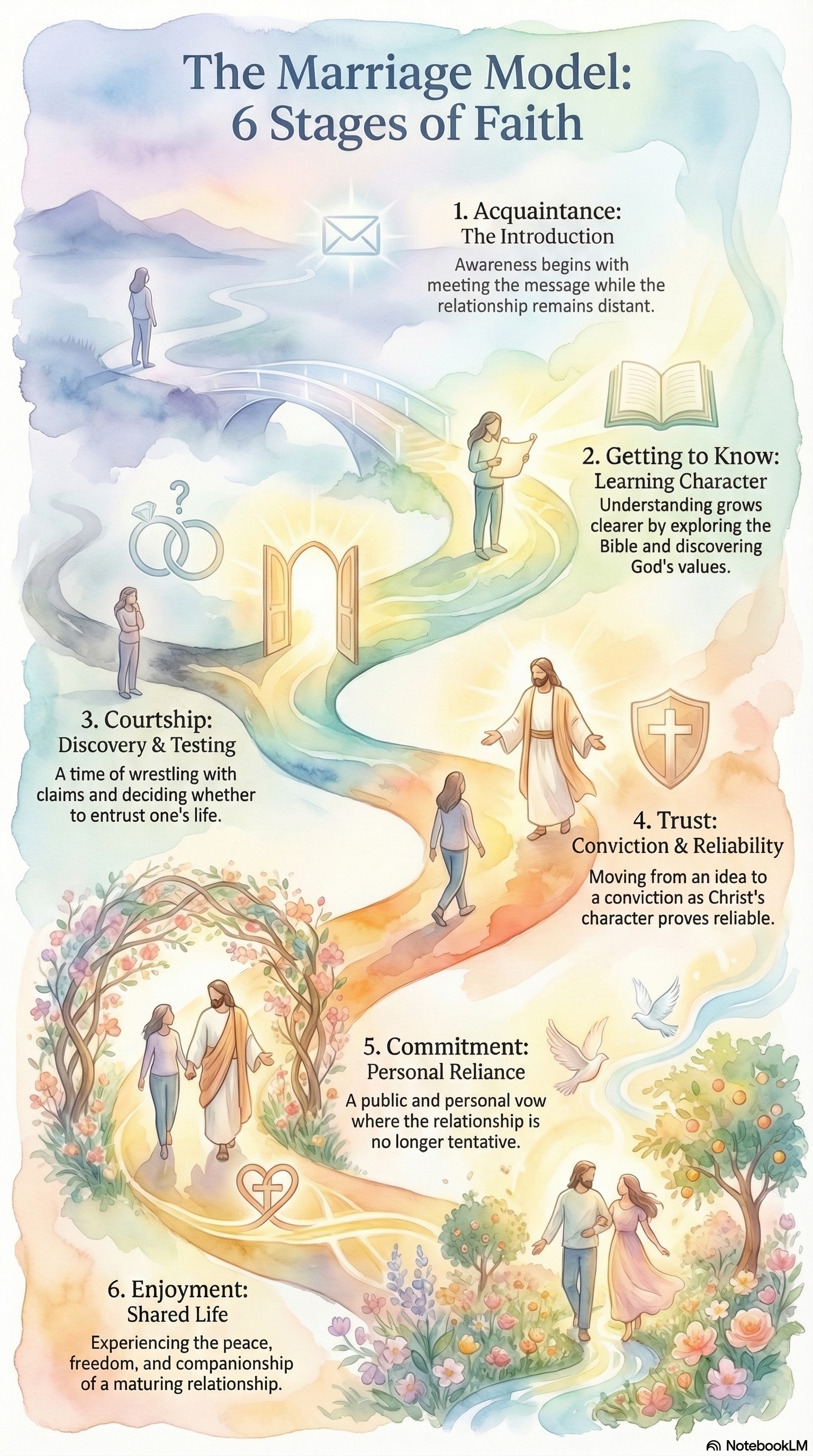
Faith is sometimes misunderstood as a single moment of belief, as if it were simply agreeing with a statement. In the Bible, however, faith is more like a developing relationship. One helpful way to understand this dynamic is through the metaphor of marriage. Just as marital intimacy develops over time, faith grows through specific stages

1. Acquaintance

Every relationship begins with an introduction. Two people meet, and while they may know a few facts, the relationship remains distant. Faith often begins this same way—as an awareness of God and Jesus Christ. At this stage, a person has simply become acquainted with the message

2. Getting to Know

Acquaintance leads to deeper knowledge.

As people spend time together, they begin learning about each other’s character, values, and intentions. Conversations grow longer. Understanding grows clearer.

Faith develops similarly. A person begins to explore what the Bible says, perhaps encountering writings such as the Epistle to the Romans or the accounts of Jesus’ life in the Gospels. The individual begins to see the character of God more clearly and to understand what the message means.

3. Courtship

When interest deepens, the relationship moves into courtship—a time of testing and discovery. Two people ask whether they can entrust their lives to one another, moving from gathering information to considering commitment. In the life of faith, this stage involves wrestling with the claims of Christ and asking if one is willing to entrust themselves to Him.

4. Courtship Grows into Trust

Healthy courtship leads to trust.

Trust forms when someone’s character proves reliable. Over time, confidence grows that the other person will keep their word.

Faith reaches a similar point. The individual becomes persuaded that Christ is trustworthy. The message proclaimed by writers like Paul the Apostle—that God justifies those who trust in Christ—begins to move from an idea to a conviction.

5. Trust Leads to Commitment

Trust eventually leads to commitment.

In marriage, two people publicly commit their lives to one another. The relationship is no longer tentative. A new bond has been established.

Faith also involves commitment. A person entrusts themselves to Christ. This is the point where faith becomes personal reliance rather than mere understanding.

6. Commitment Grows into Enjoyment

Marriage does not end with the wedding ceremony. The relationship continues to grow in companionship, joy, and shared life.

Faith also leads to enjoyment. As trust deepens, the believer begins to experience the peace, freedom, and gratitude that come from knowing God. The relationship matures over time.

Enjoyment Keeps Growing

Seen this way, faith is not merely a moment of belief but a growing relationship.

It begins with acquaintance.
It deepens through understanding.
It moves through trust and commitment.
And it grows into enjoyment.

Like a marriage that matures over the years, faith becomes richer as the relationship with Christ deepens.


The Challenge: Where Is Your Relationship?

If faith is a marriage rather than a contract, it cannot remain static. It is either drifting or deepening. Take a moment to honestly assess where you stand in this progression:

  • Are you stuck at Acquaintance? You know the facts and the history, but you’ve never moved toward a personal “getting to know” phase.
  • Are you in a permanent Courtship? You have been weighing the claims of Christ for years, but you are hesitant to move from “evaluating” to “entrusting.”
  • Has your Commitment lost its Enjoyment? You made the vow long ago, but the daily companionship and shared life have become a matter of duty rather than a living, breathing relationship.

The Next Step:

A marriage doesn’t grow by studying the concept of marriage; it grows by spending time with the spouse.

This week, don’t just “think about” your faith. Speak to God with the same honesty you would use with a partner. Move past the facts and toward the Person. Whether you need to move from acquaintance to trust, or from commitment to enjoyment, the invitation remains the same: Come and see.